[PEAK Challenge] Crazy Arcade: A good pick for two that’ll have you blaming each other even when you win
폭풍같은주황호랑이31281
![[PEAK Challenge] Crazy Arcade: A good pick for two that’ll have you blaming each other even when you win](https://peak-file.nexon.com/uploads/20260715_0557_828b3b03.png)
[Participating in the Nexon PEAK Post Challenge]
https://peak.nexon.com/post/2155
Hi, I'm 에드가.
When I'm choosing a game for two people, the first thing I consider is the skill gap.
If one person is even a little better, the other can end up struggling to keep up. But if a beginner keeps causing the team to lose, things can get awkward just as quickly. I've played quite a few games where we spent the first few rounds laughing, only to grow quieter as we went.
With that in mind, the game I find easiest to recommend is Nexon's Crazy Arcade.
The rules are simple: place water balloons and catch your opponents without getting trapped by the water blasts. Even a first-time player can pick up the basic controls in a few rounds.
But team up with someone, and it's a different story.
“Block that path.”
“Wait, I need to get through!”
“Got a needle?”
Even in a short round, there's always something to say. You're working together, but there were plenty of times when our own water balloons put each other in even more danger. The rounds that ended in a mess actually stayed with me longer than the ones that went smoothly.
The game where “just one round” was the hardest promise to keep
There was a time when a friend and I played a lot of Crazy Arcade.
At first, we logged in just to pass some time before starting another game. The rounds were short, so it didn't feel like much of a commitment.
The problem was that once we lost a round, we couldn't leave it there.
“We only lost because no items dropped.”
“We lost because you blocked my path.”
We'd trade comments like these and find ourselves starting another round. The plan was to get a win and leave, but winning made us want to keep the streak going, and losing made us want revenge.
In the end, our most frequent line was, “This really is the last round.”
Looking back, Crazy Arcade worked so well for two people because we didn't need any big progression goals. There was no need to gear up or memorize lengthy guides. We could just join the same room and start playing together.
Even after a long break, it took almost no time to get used to the controls again.
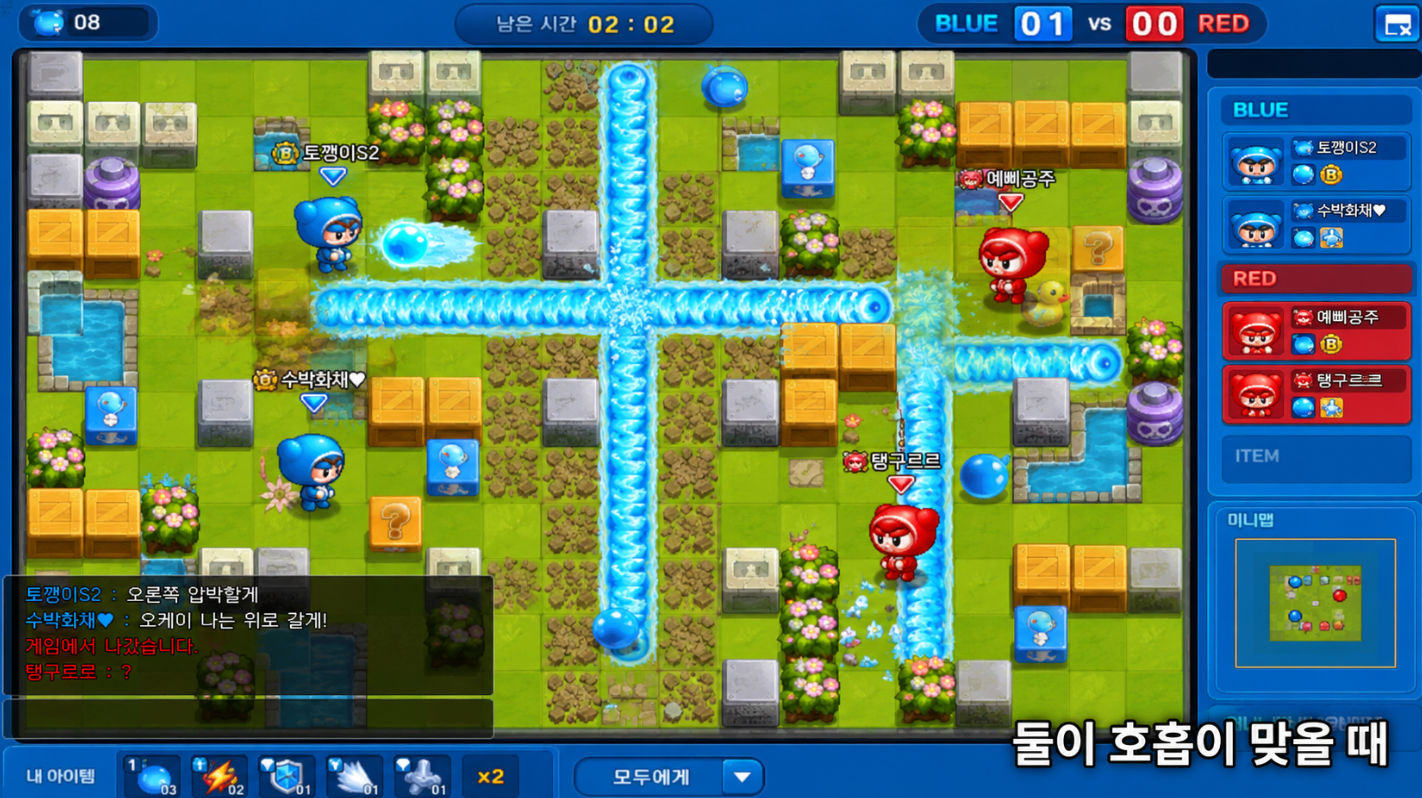
At first, we both went on the attack—and got trapped together
There's something reassuring about teaming up with a friend, at least at first.
There were two opponents and two of us, so we figured we could win easily if we helped each other. In practice, our own teammate was sometimes more dangerous than the opposition.
Once, we both headed into a narrow passage to catch an opponent, then placed water balloons that cut off our escape routes. One of us tried to get out, but the other blocked the entrance. We ended up getting hit by the water blast side by side.
From what was on screen, it wasn't obvious who was to blame.
I said my friend had rushed in too recklessly. My friend said they would have survived if I'd placed just one fewer water balloon. It took a few ruined rounds before we started dividing up our roles.
When one of us blocked an opponent's path, the other stopped following right behind. Instead, we'd cut off the passage on the opposite side or look ahead to where the opponent might escape.
Matches were much easier when we blocked different directions instead of both chasing the same person.
Crazy Arcade has simple controls, but both players having the same idea can actually make a mess of things.
A single needle could change the mood
When we played Crazy Arcade together, no item was a more delicate subject than the needle.
It gives you one chance to escape after getting trapped, so just having one is reassuring. The question was who got to take it when only one appeared.
We used to have a simple rule: whoever spotted it first took it.
But my friend kept pushing forward aggressively and getting caught without a needle, while I stayed at the back with one and finished the match without ever using it.
After that, we started dividing up items to suit our roles, too.
Whoever was clearing a path up front took the needle or other defensive items. Whoever was blocking passages from behind prioritized items that increased their water balloon count and blast range.
Of course, we didn't always stick to the plan. Plenty of times, a good item appeared right in front of us and we grabbed it before thinking.
Still, just speaking up when we picked up an important item made matches much easier.
“I've got a needle.”
Hearing that was enough for my friend to push forward a little more boldly.
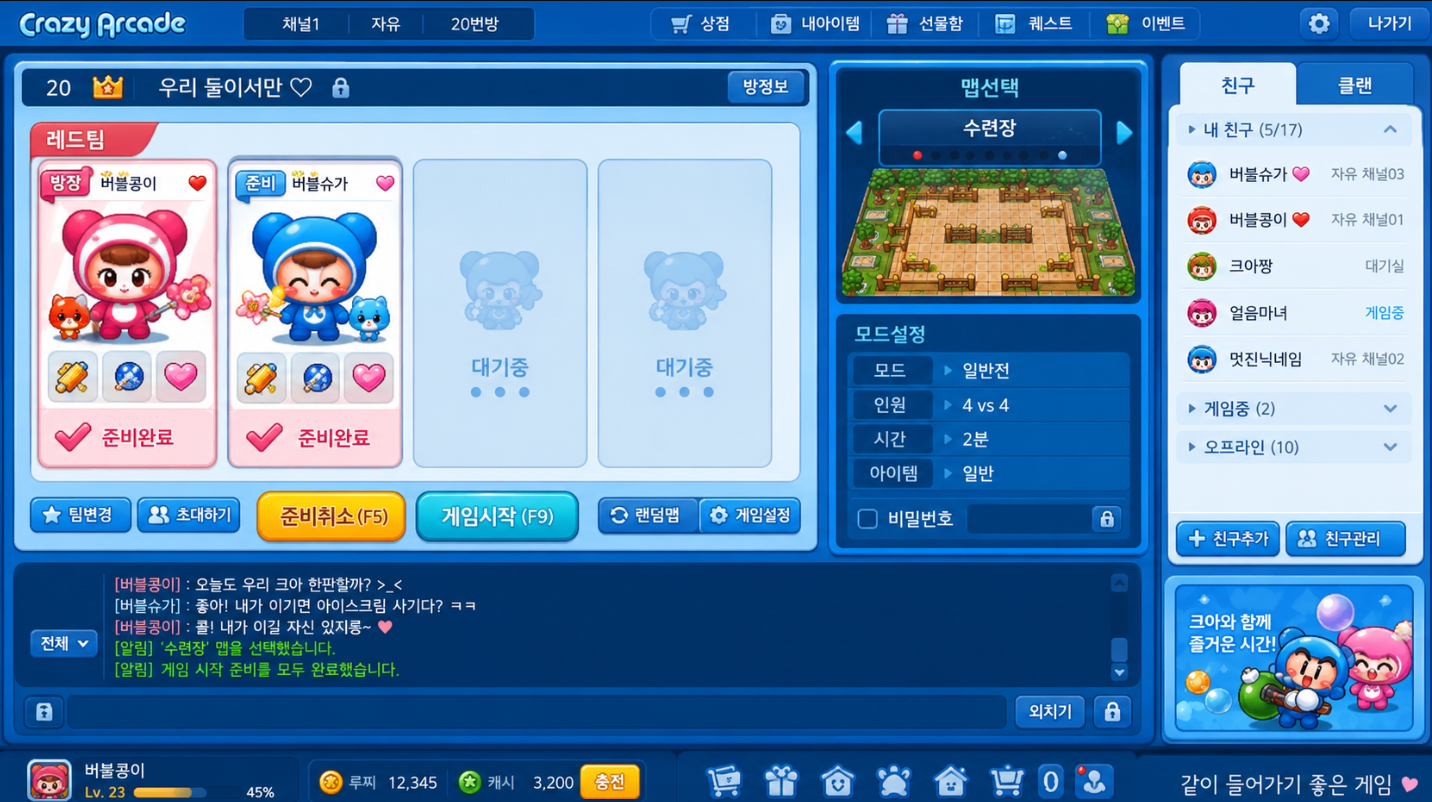
The best part of playing together wasn't the rescue, but the revenge
Rescuing a trapped friend is one of those moments that makes team play feel great.
Slip between the opponent's water balloons, save your friend, and escape together, and it feels like real teamwork. Honestly, though, it didn't always end quite so impressively.
I often went in for a rescue and got trapped too. Other times, I could easily have saved my friend but went after an opponent instead and missed the chance.
When one of us was eliminated first, all the pressure fell on the survivor.
The running commentary from the sidelines didn't help.
“Go right.”
“Don't put a water balloon there.”
“No, not that way!”
Whoever was playing asked for some quiet, while whoever was watching complained about how frustrating it was. But if the last player standing took out both opponents, the mood changed in an instant. So much for the bickering.
If we lost without much of a fight, though, we'd spend the next round chasing only the opponent who had caught my friend.
It was closer to revenge than cooperation, but that was another kind of fun we only had when playing together.
Four tips we picked up by playing together
You can jump straight into Crazy Arcade, but agreeing on a few things first means fewer losses at the hands of your own teammate.
The first is not to place water balloons one after another in the same passage.
We often tried to trap an opponent only to cut off our teammate's escape route too. In tight spaces, it was safer for whoever entered first to place the water balloons while the person behind covered another exit.
The second is not to chase the same opponent side by side.
One person should keep the pressure on while the other blocks the escape route. If you both approach from the same direction, the opponent can easily slip out the other way.
The third is to speak up as soon as you pick up an important item.
It's easier to coordinate when you know whether your teammate has a needle, whether they're fast enough, and how many water balloons they can place. If voice chat isn't an option, you can agree on a few simple roles before starting.
The fourth is not to rush to your friend's rescue every time.
If there are too many water balloons nearby, a rescue attempt can get both of you eliminated. Check whether you can actually save them first. If it looks difficult, sometimes you're better off blocking the opponent's movement instead.
If you're playing with your partner, apply that last tip with a little caution. Explaining that you couldn't save them may not go over very well.
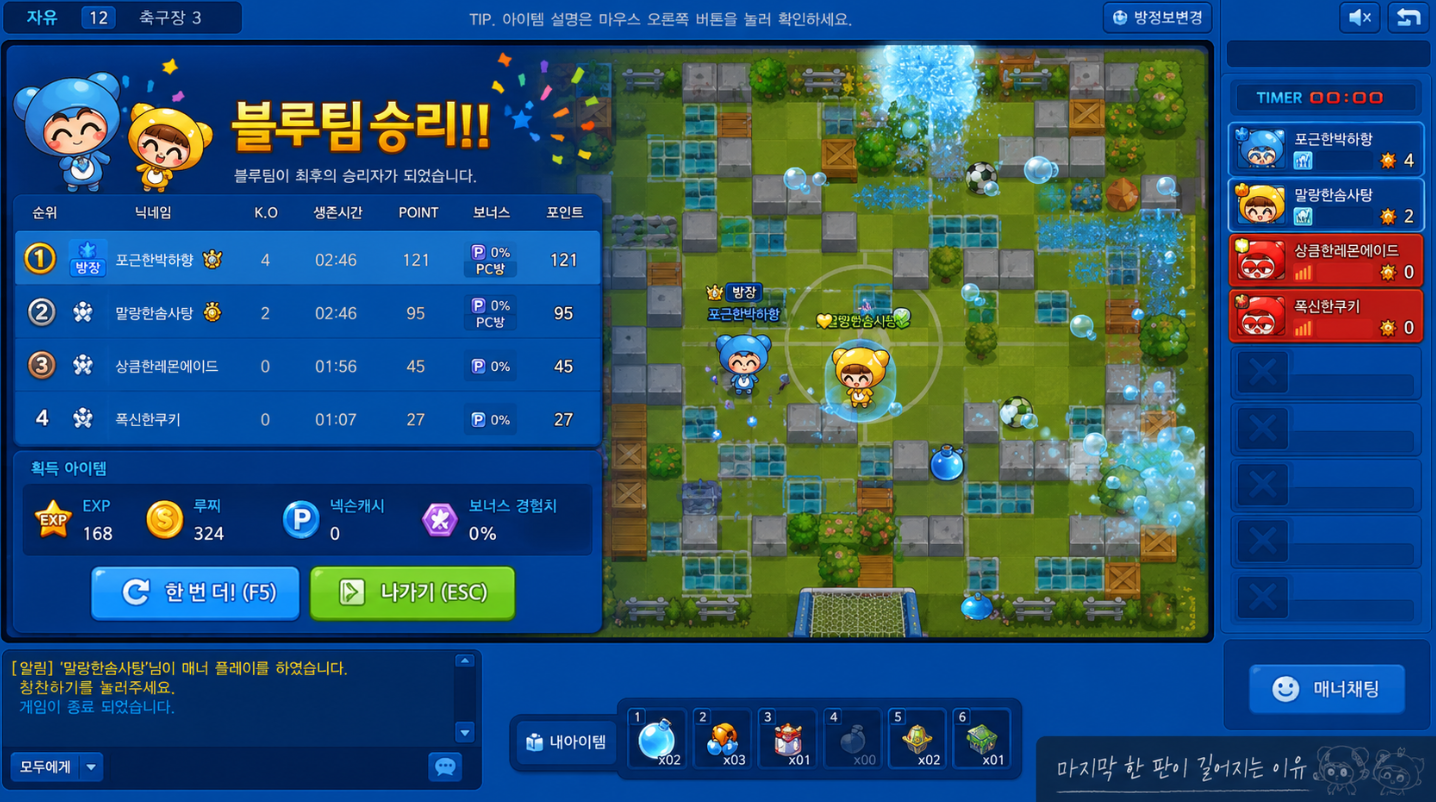
Less preparation, more time playing together
A game for two can become tiring before you've even started if there's too much preparation involved.
If there's a big level gap, or one person has to replay the opening sections, it also feels less like you're starting together.
In Crazy Arcade, you can join the same match as soon as you understand the basic rules. The short rounds give first-time players plenty of chances to try again without much pressure, and you can quickly make up for a mistake in the next round.
A skill gap didn't take all the fun out of it, either.
The more experienced player could block the opponents' paths while the newer player collected items and took things slowly. Beginners often caught opponents by chance, too, so the same person wasn't always the star.
Above all, I liked that we could give it our full attention or just play casually while chatting.
The memories of playing together outlasted the results
Looking back, I barely remember how many wins we got or which items we picked up.
What I do remember is my friend blocking my path with water balloons before running off, a promised rescue ending with both of us trapped, and the two of us shouting at the same time after catching the last opponent.
We didn't enjoy the game because our teamwork was perfect.
We enjoyed it because we'd get in each other's way and have something to say about the mistakes. It wasn't complicated enough to lead to serious arguments, and we could try working together again in the very next round.
So if I were recommending one Nexon game that's easy to get into with a friend or partner, I'd choose Crazy Arcade.
Winning through teamwork is satisfying, but blocking each other's paths and getting eliminated together tends to get an even bigger laugh.
Which stays with you longer: the times you won through teamwork, or the times you lost because of each other's mistakes?
#NPC01 #둘이하기좋은게임 #확률형아이템포함 #피크챌린지 #넥슨피크 #크레이지아케이드 #넥슨게임 #둘이할만한게임 #친구와할만한게임 #연인과할만한게임 #협동게임 #온라인게임추천 #커플게임 #팀플레이게임 #캐주얼게임 #게임추억
![[피크 챌린지] RPG는 시간을 많이 쓸 수 밖에 없는 게임이다!? NONO! 메이플스토리!](https://peak-file.nexon.com/uploads/20260714_1157_0382e268.jpg)
![[피크 챌린지] 세 살 게임 여든 간다... 엘소드, 내 첫 게임](https://peak-file.nexon.com/uploads/20260804_0920_28f29171.png)
![[피크 챌린지]20년을 함께한 도트 감성과 웅장한 서사! 넥슨 '메이플스토리'를 최고라 부르는 이유](https://peak-file.nexon.com/uploads/20260805_1131_be8d4b57.jpeg)
![[피크 챌린지] 게임굿즈추천 메이플스토리 핑크빈 인형, 책상 위에 두기 좋은 추억 굿즈](https://peak-file.nexon.com/uploads/20260624_0208_bffac308.png)