[Mabinogi Mobile] Stop Overthinking and Step into Erinn! Tips for Choosing a Character Name That’s Uniquely Yours
자경씨

This post was created as part of
NEXON PEAK activities.
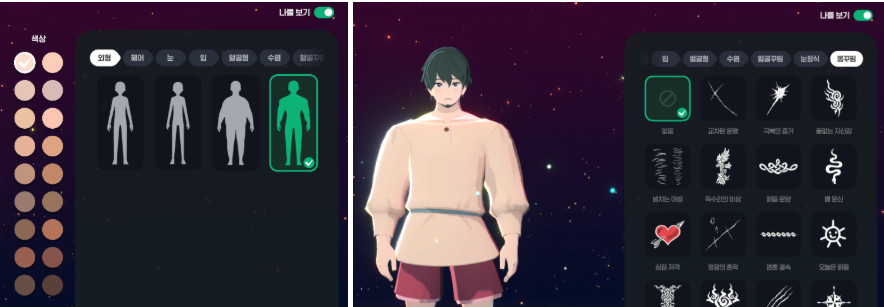
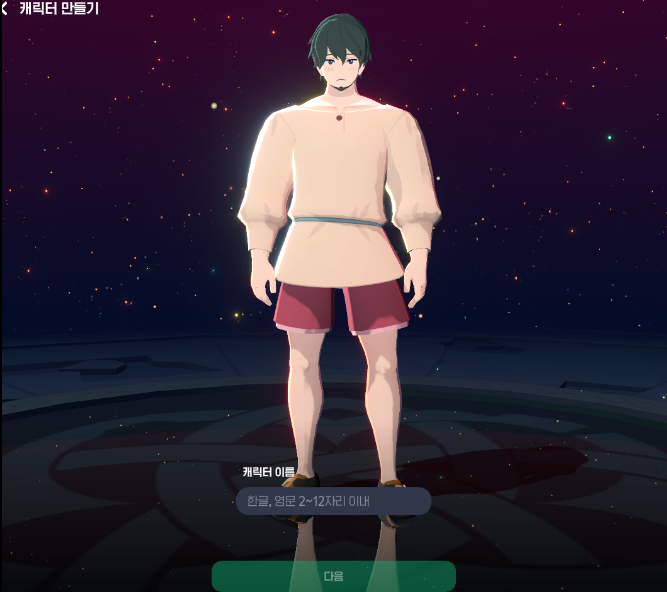
Which part of character creation takes you the longest? For me, it is choosing a name. Working through appearance, hair, eyes, mouth, face shape, beard, face decorations, eye accessories, and body decorations takes plenty of time, too. But when I reach the name field, I hesitate—even though it is the only thing standing between me and my new character. After giving it some thought, I realized why: a character name is my first expression of identity, and it is what other people will call me. Some people may find choosing one easy, of course. For anyone who needs a little inspiration, I have put together a few ideas to consider when choosing an in-game nickname.
Two characters: easy to read, easy to say
There is a reason the competition is so fierce.
Personally, I have always preferred two-character nicknames. They are easy for others to call you by, and they have a clean, polished look. Most Korean given names are also two characters long. For someone with a one-character given name, including the surname brings the total to two. Some people have longer names, of course, but they make up a relatively small proportion of the population. That may be why two-character nicknames feel so familiar and comfortable to me. They are easy to say, too.
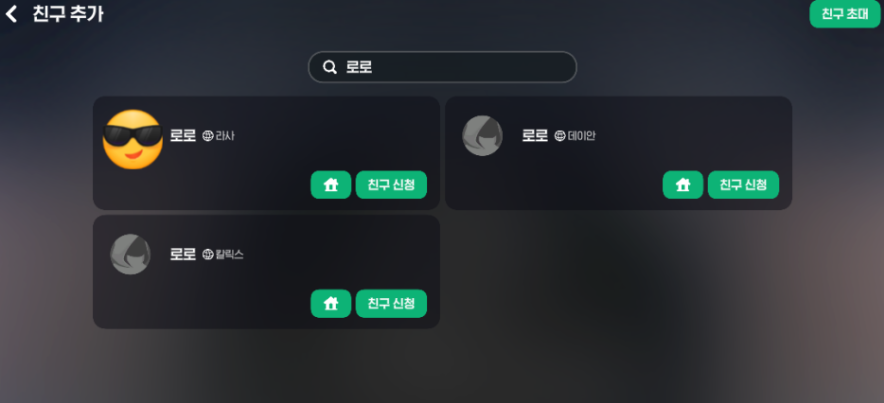
The downside is that two-character names with appealing meanings are in high demand. Most are already taken. Still, that competition is also a sign of how many people favor them. You may already have a two-character name in mind yourself. My husband Yeonho, for example, goes by the nickname 로로. I do not really remember how it came about; he has been saved under that name in my phone for a long time. But “로로” is a highly sought-after name. When I searched while writing this post, only three users still had it. In the early days, there was one on every server.
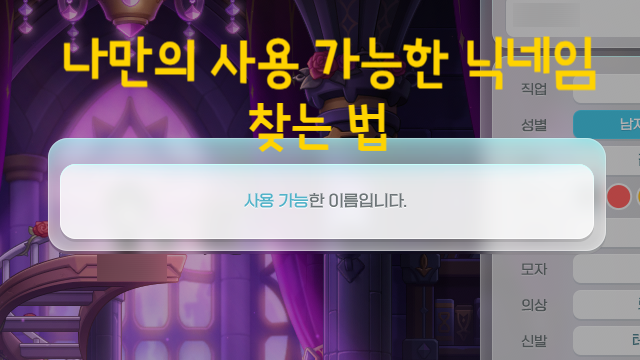
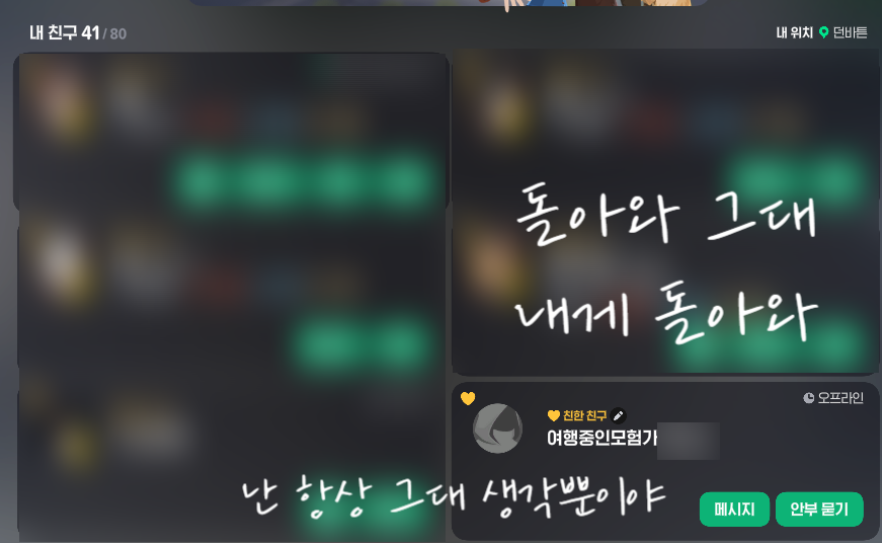
Under the current nickname policy in Mabinogi Mobile, your name changes to 여행중인모험가, meaning “adventurer on a journey,” if you do not log in for a long time. Servers were separate in the early days, but now you can join friends on other servers for raids, the Abyss, and other content. As a result, name availability is checked across all servers rather than just one. Existing users can keep their names, but those who have been inactive for an extended period have their nicknames changed. In some ways, this has made competition for names in Mabinogi Mobile fiercer; in others, it has created opportunities to claim them. If a user appears wearing a hood in search results, it means they have been inactive for a long time. Once they reach the inactivity threshold, their name will be removed. Still, it also means another player has left, so it is not entirely a cause for celebration.
That was a slight detour, but the point remains: two-character names are in high demand. If there is one you really want, you need to claim it early. If it is already taken and you are set on using it, try adding a single English letter before or after it, as in 로로K or 로로S. I usually added K, but any letter you prefer will work. These variations are usually still available. Similarly, if you want the name Malfoy but it is taken, you could try something like 말포E or 말포2.
A name that defies expectations
Add a little fun and make a lasting impression
In World of Warcraft, you choose your race and class before you begin. Unlike Mabinogi Mobile, those initial choices are permanent. If you want a different class or race, your only option is to create a new character. Most RPGs have followed this approach: once you chose a class during character creation or class advancement, you could not change it. That is part of what made Mabinogi such a refreshing surprise when it first came out. Instead of being defined by a class, your character could develop freely through skills, with the kind of freedom you might imagine in a fantasy world. Mabinogi Mobile, unlike Mabinogi, does have classes, and you select one during character creation. However, you can change it at any time simply by switching weapons.
Returning to names, one of the races you can choose in World of Warcraft is the Undead—exactly what the name suggests. One of their available classes is Priest. An undead priest may sound like an unusual combination, but there is one reason a particular character has stayed in my memory: their name was “무신론자,” meaning “atheist.” A character who had died and returned to life, only to become a priest—perhaps they had been especially devout? Yet their name said “atheist.” That contrast was both amusing and memorable. It made me realize that a name completely at odds with your character's class or style could be a fun choice.
A name built on wordplay
The enduring appeal of a play on words
Wordplay can make for an entertaining character name. Well-known examples include 카드값줘체리, a play on an anime title, and 성기삽니다, which plays on an in-game class name. I suspect the latter became even more famous because the game company banned it. Other examples include 금강산도식후경련, 양심은무이자할부로, and 무제한과금러. People have enjoyed wordplay for generations, so drawing on that tradition can be another good way to name a character.
One that really made me laugh was 돼피아즈단, a name mentioned by comedian Yoo Min-sang, though it belonged to a guild rather than a character. Other examples include “귀신이고칼로리,” “반지하제왕,” “닥터전자레인지,” “노인코래방,” “태정태세비욘세,” “모르는개산책,” and “오즈의맙소사.”
A name straight out of fantasy
Fantasy novels, romantic fantasy, and martial arts fiction
Many names draw on Norse mythology, Greek and Roman mythology, and the Bible
Giving your character a name that could belong in a fantasy novel, a romantic fantasy webtoon, or a martial arts novel is another long-standing approach. With so many games set in medieval fantasy worlds, character names often sound more like foreign names or the names of fictional protagonists than Korean names. A few that come to mind are 유리아, Charon, Lapis, 엘퀴네스, and Seraphim. These names did not simply appear out of nowhere; quite a few have meanings behind them. Trace them back far enough, and you will often find roots in Norse mythology, Greek and Roman mythology, or the names of biblical angels.
I once wanted to find a less familiar angel's name, since Gabriel, Michael, and Raphael were so well known. After some searching, I came across the Seraphim. They belong to the highest angelic order and have 6 wings, if I remember correctly. The name Seraphim is widely used now, but it was less familiar back then. I also learned that it meant fire, so I combined it with other elements to create character names. Names like these tend to carry meaning. Exploring their origins can help you find one with a meaning or quality that appeals to you.
Somewhere along the way, I grew fond of Korean names
Character names follow trends, too
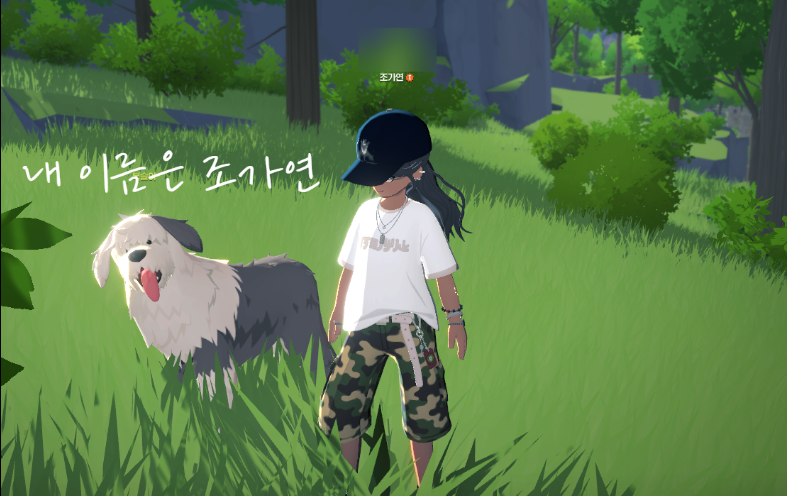
When I was younger, many character names I encountered in games were in English or used English words written phonetically in Korean—“블루레몬,” or “Blue Lemon,” for example. At some point, though, I found myself drawn to Korean-style names. Whether I am playing with words or choosing a name that sounds like a real person's, I prefer Korean. My affection for the language seems to grow with age. Names like 검호 or 유리아 felt more common in the past, but these days I see more characters with names that could belong to real people, much like my own character, 조가연. A search would probably turn up someone who actually has that name. After all, plenty of people in Korea share names.
I have come to see this as another trend in character naming. Why not try a name you wished you had as a child, or even use your own? If you are uncomfortable using your real name, you could adapt it or choose another way to express your identity.
When nothing comes to mind, no matter how hard you try
Combine words inspired by what is right in front of you
This is a method I use occasionally, and it will probably be familiar to many of you. It may even be the easiest approach: write down random words for objects you see or thoughts that come to mind, then combine them into a character name. There is a saying that the color of your top plus the last food you ate makes a convincing indie band name. As I write this, mine would be 까만브리또, or “Black Burrito.”
This is another example of the richness of Korean. I am wearing a black top and had a burrito for dinner, so I could choose 검정색브리또. But 까만브리또, 새카만브리또, 검은브리또, 암흑의브리또, 검정브리또, and 흑색부리또 are all options, too—there are so many ways to express the color black. Yellow has several forms as well, including 누런, 노란, and 노랑. That leaves room for all sorts of combinations. If you are truly stuck, try combining a food you have eaten, a word you like, and an object in front of you.
These are a few approaches and ideas to help you choose a character name or nickname. Of course, advice on how to choose a name may still leave you asking, “But what should I actually call my character?” Knowing what makes a good name is one thing; finding the exact word or name that feels right to you is another. The more words you encounter and read, the more options you will have to draw on.
Ultimately, though, your character represents you, so try not to put too much pressure on the choice. Mabinogi Mobile even offers character name change tickets. I initially chose 로로K, but I was not happy with it. Recently, I used a ticket to change to a name that included a surname, and I am much happier with the result. Rather than spending too long worrying over the perfect name, why not start playing and visit Erinn? You can always change it later when you find a name you truly like that suits your character. I will be here to welcome you.