[PEAK Challenge] MapleStory, a Game You Grow More Attached to the Longer You Invest in Your Character
Tuanzebe
![[PEAK Challenge] MapleStory, a Game You Grow More Attached to the Longer You Invest in Your Character](https://peak-file.nexon.com/uploads/20260810_0804_4d6e9cbf.jpg)
[Participating in the Nexon PEAK Post Challenge]

The game I’ve grown more attached to the longer I’ve played it is MapleStory.
In this post, I want to talk about the appeal of watching a character gradually become truly my own over time, through leveling, symbol growth, equipment setup, and boss challenges.
I don’t think what keeps someone playing a game for a long time is simply the amount of content it has. You stay with it when the time you invest leaves a mark on your character, and when you can feel that you are just a little stronger today than you were yesterday. In that sense, MapleStory was a game that made me more attached to my character the longer I raised it.
MapleStory’s biggest appeal is that its progression never really ends all at once. At first, leveling feels like the only goal, but before long you start thinking about symbols, equipment, core enhancement, boss clears, union, and link skills as well. There were times when that amount of upkeep felt burdensome, but it also meant there was always another reason to keep playing and another direction to progress toward.
When I first started raising a character, it was fun simply to watch my level go up while hunting. I could move into new areas, use new skills, and immediately feel the difference as monsters started going down faster. Because that sense of growth was so clear every time I leveled, I kept finding myself logging in again.

But MapleStory’s real long-term appeal did not stop at leveling alone. It also came from progression systems that build up little by little every day, such as Arcane Symbols and Authentic Symbols. You do not become dramatically stronger overnight, but as you complete daily quests and collect rewards, your symbol levels rise and your stats increase. The longer I played, the more meaningful those changes felt.
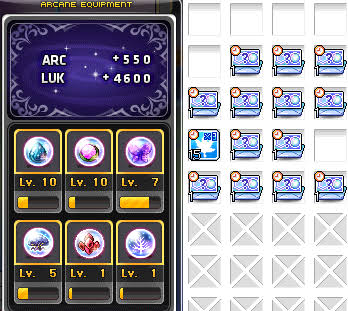
I think symbol growth shows MapleStory’s steady progression more clearly than almost anything else. At first glance, the rewards can seem small, but after several days or weeks, the difference becomes obvious. Hunting maps that once felt difficult become more comfortable, you survive longer in boss fights, and your damage climbs little by little. That kind of accumulation naturally turned into attachment to the character.
Equipment setup was another major reason I kept playing for so long. In MapleStory, equipment is not something you finish in one step. From your weapon, secondary weapon, and emblem to your armor and accessories, everything has to be built piece by piece, and before long you also start paying attention to systems like potential and Star Force. It felt complicated at first, but every time I upgraded one part, I could see my character getting stronger, and that made the process enjoyable.
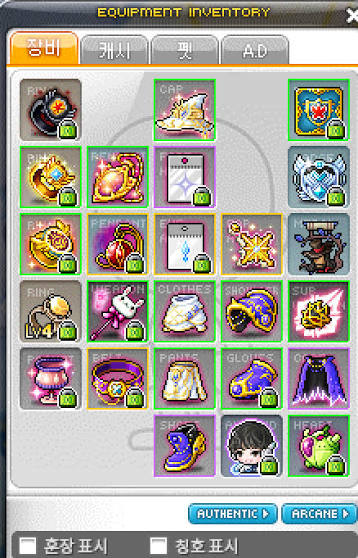
What felt especially satisfying was noticing the difference after changing my equipment, whether in bosses or while hunting. When monsters that used to take a while started dying faster, or when I could take off more of a boss’s HP than before, the feeling of growth was unmistakable. I liked that it was not just a matter of higher numbers on paper, but a real change in how the game felt to play.
Core enhancement was also one of the pleasures of raising a character over time. As I strengthened my main skills and worked toward the cores I needed, I came to understand my class more deeply. There was a clear learning process in figuring out which skills mattered most and which combinations I should prioritize. The longer I played, the more familiar I became with the class’s skill structure and hunting style.
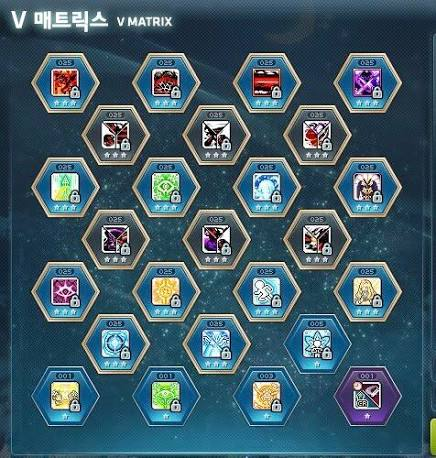
The biggest goal that kept me playing MapleStory was bosses. At first, even easy bosses felt tense, but as my character grew, I naturally started aiming for higher ones. Once a new target appeared—like Chaos Root Abyss, Suu, Damien, or Lucid—I found myself thinking about exactly what I needed to improve in order to clear it.
Bosses felt like the place where MapleStory’s progression could really be tested. After changing equipment, raising symbols, and enhancing cores, it was deeply satisfying to challenge them again and survive longer or take away more of their HP than before. Even when I failed, it still gave me a goal—the feeling that I only needed a little more progression. That is why bossing became such a strong motivation for me to keep developing my character.
The first bosses I cleared are the ones that stayed with me the longest. Finally defeating a boss that had once killed me because I did not know the patterns, or that I had failed because my damage was lacking, or that forced me out after I used up my death count, brought a huge sense of accomplishment. MapleStory felt like a game where moments like that accumulate, and where the memories tied to a character build up alongside them.
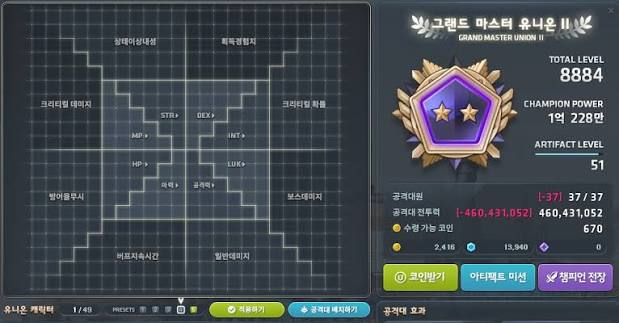
Union and link skills were also systems that became more enjoyable the longer I played. At first, it can seem like raising one main character is enough, but once you start building multiple characters, your whole account gradually becomes stronger. Trying other classes also makes the world of MapleStory feel broader, while still helping your main character progress. It is a structure that fits long-term play especially well.
Events were another reason I kept coming back. In MapleStory, events often provide growth rewards, cosmetic items, and various currencies. During an event period, your goals become more defined than usual, and you have another clear reason to log in. By keeping up with event rewards, I often found that useful resources for character progression had piled up before I even realized it.
The longer I played, the more attached I became to cosmetics as well. At first, I was focused only on getting stronger, but over time I started paying attention to my character’s appearance too. Once I matched hairstyles, face options, outfits, and weapon cosmetics that suited my taste, the character felt even more like my own. As progression and customization built up together, so did that attachment.
One reason MapleStory works so well as a long-term game is that its goals branch in several different directions. One day I can focus on leveling, the next I can do symbol dailies, and on the weekend I can run bosses. Some days are for checking equipment, while others are for cosmetics. Even when I got tired of one type of content, I could shift my focus to a different goal and keep going.
Of course, because it is a game built around long-term progression, there were also times when it felt overwhelming. When everything starts to look like a list of chores, it can easily feel like homework. But instead of trying to do everything at once, it felt much more manageable when I picked just one goal my character needed at that moment. Thinking in terms of “Today I’ll just do my dailies,” or “This week I’ll only focus on bosses,” made it much easier to keep playing over the long run.

The playstyle I would recommend is simple: keep setting small goals. Rather than aiming for a top boss right from the start, it is better to target the boss one step above what you can currently clear. The same applies to equipment—rather than trying to finish everything at once, you can start with your weapon, your secondary weapon, or even a single accessory. For me, that process of building things up little by little is where MapleStory’s real enjoyment lies.
MapleStory is a game where the time you invest leaves visible traces on your character. Levels, symbols, equipment, cores, union, and even cosmetics all feel like the result of the time I have spent playing. That is why a character I have raised for a long time no longer feels like a simple game character, but more like a record of everything I have built up along the way.
In the end, that sense of attachment was also the reason I kept playing. When a character grows steadily stronger, when content that once felt out of reach becomes possible, and when bosses I previously failed finally fall, it becomes hard to walk away. You start thinking, “I’ve already brought this character this far, so maybe I can go just a little further.” That feeling is what kept me with MapleStory for so long.
For me, MapleStory is a game whose enjoyment deepens the longer I play. It is not a game you complete overnight, but that is exactly why the satisfaction feels so great once enough time has gone into it. As leveling, symbol growth, equipment setup, boss clears, and cosmetics build up one by one, so does your attachment to the character.
That is why I would describe MapleStory as a game built around the pleasure of long-term character growth. Rather than something you finish quickly, it is a game that suits players who want to invest time into developing a character of their own. To me, MapleStory’s greatest appeal is the way you can set goals, achieve them bit by bit, and watch your character remain as a kind of personal record of that time.
To sum up the main points from today:
MapleStory is a game where the longer you raise a character, the more attached you become to it.
Leveling and symbol growth let me feel the satisfaction of becoming a little stronger every day.
Equipment setup and core enhancement made those increases in strength feel tangible in actual play.
Boss challenges were the biggest motivation, because they let me test my progression and set the next goal.
Union, link skills, events, and cosmetics all built up together, giving me ongoing reasons to keep playing.
Do you have a game you grew more attached to the longer you played it? If there is a game you spent the most time steadily progressing through, or a character that still stands out in your memory, I’d love to hear about it in the comments.
![[피크 챌린지] 둘이 같이 팀을 짜고 경기까지 즐기기 좋은 FC온라인](https://peak-file.nexon.com/uploads/20260719_0656_fdca1063.png)
![[피크 챌린지] 메이플랜드로 느낀 요즘 PC 온라인게임의 변화, 이제 모바일도 된다](https://peak-file.nexon.com/uploads/20260623_0428_33212b8d.png)
![[피크 챌린지] 솔로플레이 하기 좋은 모바일 마비노기](https://peak-file.nexon.com/uploads/20260626_0631_6fe1ba8d.webp)
![[피크 챌린지] 모션으로 말해요~! 귀여움과 재미를 모두 담은 마비노기모바일 모션들](https://peak-file.nexon.com/uploads/20260706_0536_5a6bb738.png)