[PEAK Challenge] #요즘할만한장수게임, is it worth getting back into Vindictus now?
우아한보라여우22732
![[PEAK Challenge] #요즘할만한장수게임, is it worth getting back into Vindictus now?](https://peak-file.nexon.com/uploads/20260726_0942_cd23e548.png)
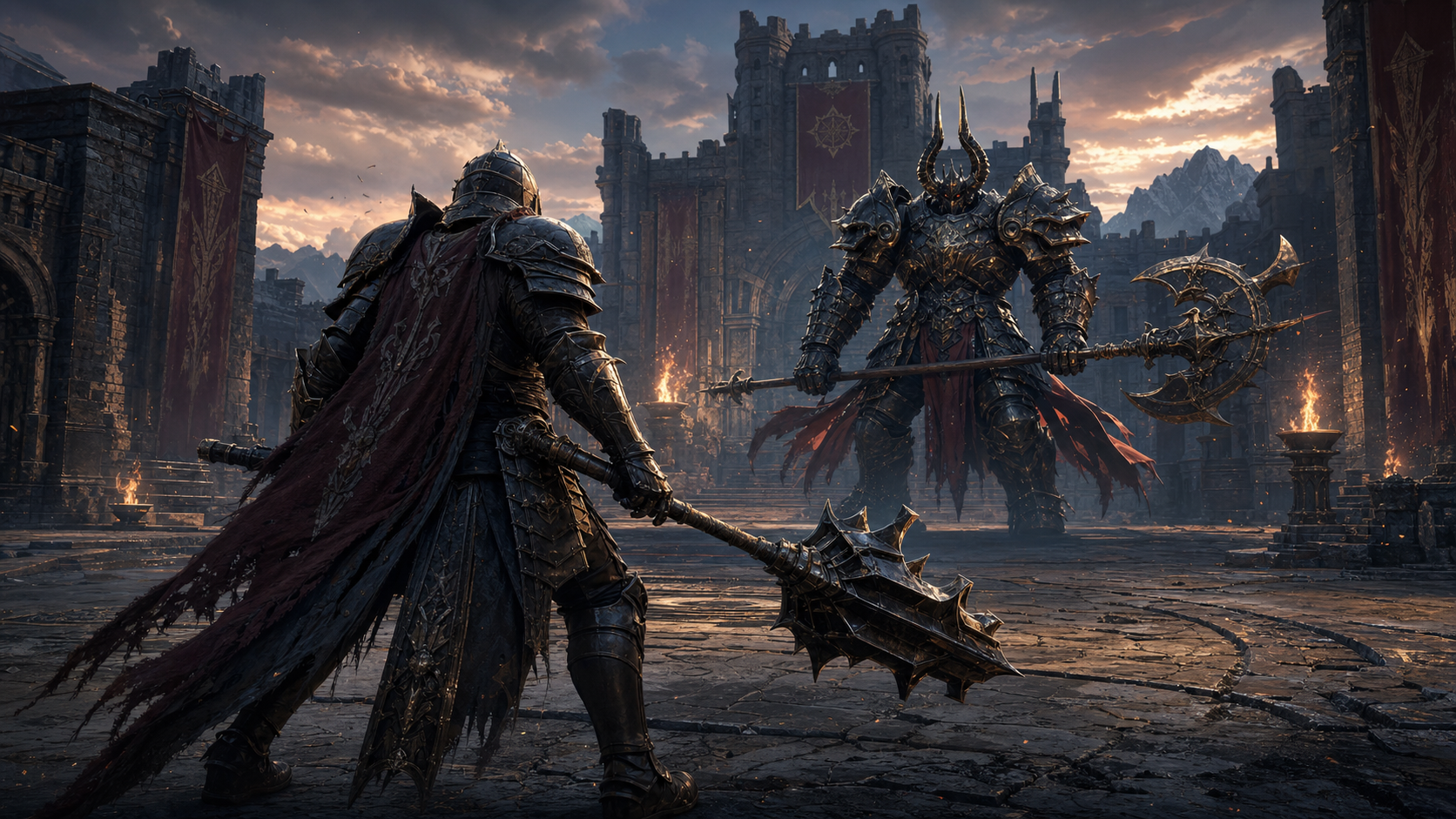 [Participating in the Nexon PEAK Post Challenge]
Week 6 Mission · #GamesThatAreStillWorthPlayingTheseDays
When recommending a long-running game, nostalgia is not enough. “It used to be good” and “it is still worth starting now” are two very different claims. Looking at Mabinogi Heroes again in July 2026, I separated the reasons it has lasted this long from the trade-offs new players still need to accept.
Evaluation criteria: July 25, 2026 · Based on the Korean live service and materials published on the official website
Conclusion first. If you prefer manual action combat over auto-battle, and you enjoy comparing how different characters feel to control, it is still worth trying. If you dislike layered growth materials or want to reach endgame as quickly as possible, however, the game can feel demanding once you move past the early stretch.
More than 15 years This PC action RPG officially marked its 15th anniversary in 2025.
28th hero On July 16, 2026, the new hero Lumiel was added to the live servers.
Still receiving updates New content is still arriving, including Season 4 Episode 15 and a new hero.
Old does not automatically mean outdated
Mabinogi Heroes held its official 15th anniversary event in 2025. Games that have lasted this long usually have two sides. A large backlog of content and a deep character roster are strengths, but for a first-time player, they also mean menus and material names hit all at once.
Even so, there is a clear reason to reassess it now. In July 2026, the 28th hero, Lumiel, was added. Lumiel switches between ranged and melee attacks and uses a Bond gauge filled through attacking and evading. One new character does not solve every long-standing issue, but it does confirm that development and updates have not stopped.
The main reason it still holds up is the combat
The core of Mabinogi Heroes is still its hands-on combat. Attack routes, evade and guard timing, and resource use all vary by character. That is why picking the mathematically strongest character and picking the one that actually fits your hands do not always lead to the same answer.
You can see that clearly in the new hero design as well. Lumiel links the Bond gauge, enhanced attacks, and stamina recovery into a single flow. Other characters run on completely different rhythms built around counters, guards, or repeated evasions. Even in an old game, that structure still gives each new character release the appeal of learning the controls from scratch again.
Complexity is a brief wall, then it becomes the next goal
At the start, I did hesitate. As you would expect from a long-running game, unfamiliar systems arrive in bulk—menus, growth materials, gear tiers, and more. I ended up scanning the same screen several times because it was not immediately clear what to deal with first.
After a little while, though, that complexity started to function more like the next objective. Hero’s Path provided an immediate progression order, and the current “Hero’s Leap” event broke the post-115 growth section into mission-style steps. Because the required battles and rewards were clearly visible, progression felt less like vaguely raising stats and more like checking off goals while getting stronger at a good pace.
Trying to understand every system from the beginning is a good way to make the game feel heavier than it needs to. If you instead follow Hero’s Path and Hero’s Leap one step at a time, the cluttered screen starts to read more like a to-do list. That was the point where Mabinogi Heroes started to make sense to me as a good game. Its accumulated systems can absolutely act as an entry barrier, but once the game gives you direction, those same systems turn into long-term goals.
Where new and returning players now get lost less easily
The official website separately organizes guides for beginners and returning players, supply gear, and Hero’s Path. Rather than searching up older information and memorizing outdated gear names first, the safer approach is to follow the in-game Hero’s Path and the current official guides.
If you plan to build multiple characters, gear sharing is also worth checking. According to the official guide, gear can be shared between characters that meet certain conditions. It is a system that preserves the advantage of having a large roster while reducing the burden of gearing every character from scratch. That said, there are conditions tied to level, sharing cost, and synchronized sortie counts, so it should not be treated as a free transfer system with no limitations.
|
When you first log in |
What to check first |
What to leave for later |
|---|---|---|
|
Choosing a character |
Attack range, evade/guard style, and control rhythm |
A single community tier list |
|
Early progression |
Hero’s Path and the current supply gear guide |
Calculating endgame gear prices |
|
Adjusting to combat |
One main combo route and one survival tool |
Memorizing the optimal order for every skill |
|
Alternate characters |
Gear sharing conditions and cost |
Leveling multiple characters at the same time |
If you only test it for an hour, do this
-
Pick just two candidates from the character introduction videos. Do not judge by appearance alone; compare characters with clearly different attack ranges and defensive styles.
-
Follow Hero’s Path through the basic combat flow. Do not open every menu immediately. First check whether attacking, evading, and your core combo feel natural.
-
At the first boss, deliberately test guard and evasion. Instead of focusing on a fast clear, see whether reading attack tells and responding to them is actually fun.
-
Adjust the graphics and frame settings once. In an action game, frame rate and input response directly affect how the combat feels, so do not judge it only by the default setup.
-
At the end of that hour, ask whether you want to see the next fight. More than any reward table, the quickest test is whether the combat itself makes you want to queue up one more battle.
There are drawbacks that come with being a long-running game
Because it has been running for so long, there are many growth systems, materials, and raid tiers to process. Even with early guidance, the closer you get to the later sections, the more often you need to check again what should be upgraded first. The confusion gets worse when recent guides and older guides mix different gear names together.
Mabinogi Heroes is also not a game built for comfortable auto-battle. Direct control is one of its strengths, but on a tired day that same strength can become a burden. Some players will like the character designs and the action while still finding repeated combat or gear progression a poor fit.
A long service history alone is not enough to justify a recommendation. The more important question is whether the game’s distinctive combat is still there when you log in now, and whether a first-time player has a clear way to test it.
So who is it still easy to recommend to?
|
Easy to recommend to |
Players who should think first |
|---|---|
|
You like action built around manual dodges and punishes |
You prefer auto-battle and short daily sessions |
|
You enjoy learning a different control style for each character |
You feel drained as soon as you see lots of materials and progression layers |
|
You find satisfaction in learning boss patterns and cutting down mistakes |
Your top priority is reaching endgame as fast as possible |
Mabinogi Heroes is not a game I would recommend to everyone. Still, if I had to name one older PC online game that still deserves consideration for its manually controlled boss combat, it remains on the shortlist. It is also much easier to judge if you go in with the goal of testing how one character feels to play, rather than trying to catch up immediately.
Related posts to read when starting out
-
Mabinogi Heroes Character Recommendation Checklist - If you want to narrow down your first character candidates by control preference
-
Mabinogi Heroes Lumiel Beginner Introduction - If you want to check controls and gear order during the first 30 minutes after character creation
-
Mabinogi Heroes Option Settings Guide - If you want to set up frame rate and DirectX 11 options first
![[피크챌린지] 접속만 해도 설렜던 던파모바일 로딩화면, 그때 기억나시나요?](https://peak-file.nexon.com/uploads/20260627_0124_1ffde5cb.jpg)
![[피크 챌린지] 보면 볼수록 갖고싶어지는 마비노기모바일 굿즈!! 아 사고싶다..](https://peak-file.nexon.com/uploads/20260628_1249_2671811a.png)
![[피크 챌린지] 모비노기 모션은 못이긴다고 생각](https://peak-file.nexon.com/uploads/20260706_1025_01ddc66a.png)
![[피크 챌린지] 마영전 하루 20분 접속 루틴: 영웅의 길·도약에서 오늘 할 일 하나만 고르기](https://peak-file.nexon.com/uploads/20260726_0941_4fdccae0.png)