[PEAK Challenge] Why I Never Got Tired of DNF: So Many Classes to Choose From
드록바원툴

Participating in the Nexon PEAK Post Challenge
[Participating in the Nexon PEAK Post Challenge]
If I had to name just one reason I still enjoy DNF after years of playing, it would be the sheer number of classes. Every time I create a character in a class I have not tried before, it feels like starting the game for the first time.
Today, I want to explore that class variety and why it keeps DNF from growing stale for me.
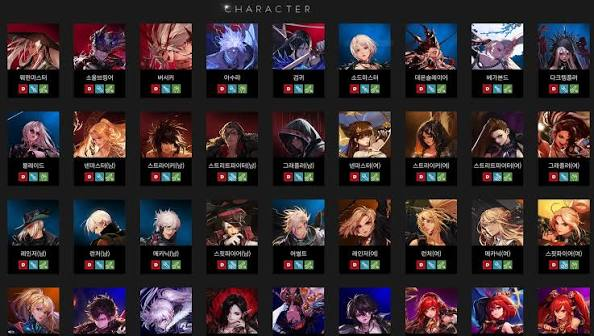
As of the second half of 2026, DNF has 36 physical attack classes, 27 magic attack classes, and 8 hybrid classes—a total of 71, including supplementary classes. That number did not really sink in when I first heard it. As I tried them one by one, though, I began to understand what having 71 classes actually meant.
It is not simply a matter of quantity. Each class has a completely different playstyle. Some dash around, unleashing close-range attacks, while others cast spells from a distance or support their party members with buffs. Even within the Slayer category, Soul Bender, Sword Master, Dark Templar, and Ghostblade fight in completely different ways. Once I have thoroughly enjoyed one class, that variety makes me want to try another with an entirely different style.
The important distinction is that many classes differ not just in their skill sets, but in how you control them. Some involve chaining skills together to sustain a combo, while others focus on landing a single powerful skill at the right moment. Others rely on summons that attack automatically. It is still DNF, yet each class has your hands moving in completely different ways.

This is what keeps DNF fresh for me. Creating a new character and trying their skills for the first time, figuring out how the class fights, and deciding how to build a skill tree feel new every time.
After spending a long time playing a Slayer, I created my first Female Gunner. Using firearms to deliver sustained firepower from a distance felt so different that it was awkward at first. My hands were accustomed to close-range combat, and adjusting to ranged controls took time. That awkwardness became part of the fun, though. Learning new controls and finding the class's rhythm felt much like discovering DNF for the first time.
Moving to the Mage category changes things again. Elementalist combines elemental spells to deal area damage, while Battle Mage mixes close-range combat with magic in a distinctive style. Summoner deploys summons on the field to deal damage indirectly, which calls for another completely different approach. Even within the Mage category, the classes differ enough that each new one gives me something to study and learn.
The Priest category offers a similar contrast. Crusader supports party members with buffs, and playing that role for the first time after focusing on damage dealers feels completely different. Instead of dealing damage myself, I help my party members fight more effectively. Even in the same dungeon, my contribution changes, and that shift in roles becomes a new experience in its own right.
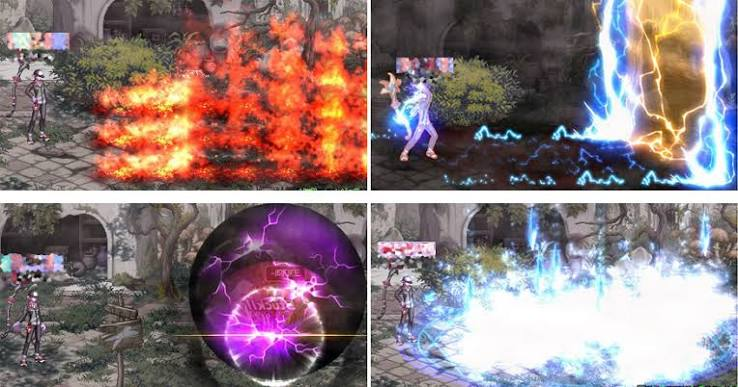
DNF has four elements—Fire, Water, Light, and Shadow—with different classes specializing in different elements. Crusader and Nen Master specialize in Light, while Soul Bender and Dark Knight specialize in Shadow. Other classes use every element, including Elemental Bomber, Elementalist, Summoner, Battle Mage, and Witch.
The elemental system adds another layer of depth to class variety. The most advantageous element depends on the dungeon, which in turn influences which class to use. The distinction goes beyond having a large roster: each class's elements and characteristics make a practical difference in how the game plays.
As my understanding of the elements grows, my class choices also feel broader. At first, I simply chose whatever looked impressive. Over time, I learned which elements worked best in different situations, and creating characters with those advantages in mind became part of the strategic appeal. It is one of the things that has taken me from simply enjoying DNF to exploring it in depth.

There is more to this variety than a total of 71 classes. Each base character generally has 4 advancement options, while some, including Male and Female Slayers, Male and Female Mages, and Male and Female Gunners, have 5. After creating a character, choosing an advancement completely changes the direction of play from that point onward.
Deciding on an advancement for a new character is part of DNF's appeal, too. Creating a Slayer and weighing up Soul Bender, Sword Master, or Avenger means looking up gameplay videos and comparing their styles. That process lets me enjoy the game before I even get started. Once I choose an advancement, its unique skill tree opens up, and an entirely new path of progression begins.
Having such a difficult choice can seem like a drawback at first. I did not know what to choose and worried that I would regret the wrong decision. Looking back, though, that deliberation was itself a way of getting to know DNF more deeply. Studying each class's characteristics, reading other players' opinions, and watching gameplay videos to find a style that suited me all helped me build a more rounded understanding of the game.
DNF's class variety does not end with advancement. Classes evolve further through Awakening and Neo: Awakening. Awakening adds new skills, while Neo: Awakening strengthens the class's identity another step.
A class can play differently after Neo: Awakening than it did when I first chose its advancement. New skills can reshape existing combos or change the fundamentals of how I play the class. Even with a class I have played for a long time, each Awakening and Neo: Awakening adds another layer of depth. That is why there is still something new to learn after all that time.
Another reason DNF stays fresh is that new classes are added regularly. Adding more when there were already 71 initially seemed excessive to me. Yet whenever another class was revealed, I was surprised to find myself wanting to try it.
New classes take their skill sets and playstyles in different directions from the existing roster. With each addition, I get the sense that the DNF development team is trying to introduce a distinct feel to the controls or a concept the game has not explored before. That leaves me curious about how the next class will play—and gives me another reason to launch the game again.
Players regularly flock to new class releases in numbers large enough to crash the servers, a recurring scene that has become a distinctive part of DNF's culture. A new class gives even longtime players the excitement of starting from scratch like a newcomer. The way that feeling returns year after year seems to explain better than anything why DNF never grows stale.
Ultimately, I think the biggest reason I never tire of DNF is that, after all these years, there are still so many classes I have not tried. Just when it feels as though I have tried them all, another arrives with a different kind of enjoyment, and the cycle continues. Starting a new class brings back the excitement I felt when I first began DNF. For me, that is what makes this a game I can keep playing for years.
Which DNF class have you enjoyed playing the longest? Let me know in the comments.