[PEAK Challenge] Why TalesWeaver Is My All-Time Favorite: It Was All About the Story and Music
드록바원툴
![[PEAK Challenge] Why TalesWeaver Is My All-Time Favorite: It Was All About the Story and Music](https://peak-file.nexon.com/uploads/20260713_0214_5b431051.jpg)
Taking part in the Nexon PEAK Post Challenge
One online game moved me with its story and left its music playing in my head long after I turned it off. That game was TalesWeaver.
Today, I want to share how its story and music alone made TalesWeaver the game that has meant the most to me.
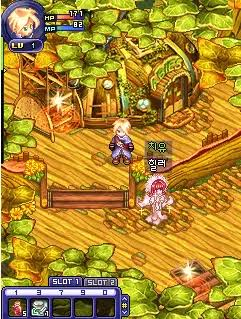
What surprised me most when I first played TalesWeaver was finding an online game that took its story seriously. Most MMORPGs revolve around leveling and hunting, with the story serving as little more than a backdrop. Skipping quest text without reading it and clicking past NPC dialogue was simply the norm. But TalesWeaver was different from the start.
In a way that was rare among Korean online games, progression is directly tied to the story, so following the quests naturally draws you into it. This goes beyond reading text: the world and the characters’ personal histories unfold naturally as you play. I would log in to hunt, only to become so absorbed in the story that I could not stop playing—I needed to know what happened next.
Each episode offers some closure, but the overarching story continues through to the final episode. Finishing one and wondering how the next would unfold felt much like playing a standalone game. I had not expected to find that feeling in an online game.
Above all else, TalesWeaver focuses on two things: a moving story to experience together and thrilling combat. It lets you follow its story online with much the same feeling as playing a conventional standalone game. At first, that description sounded like an exaggeration, but playing it showed me how true it was.
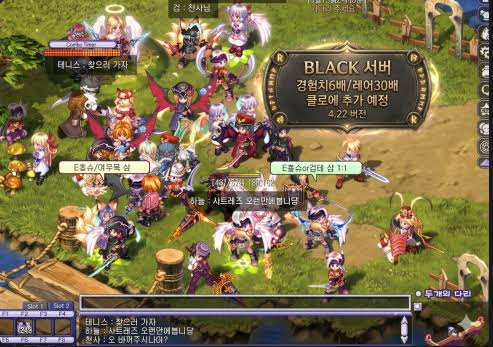
I think the strength of TalesWeaver’s story comes more from its characters than from its world. Each character has such a clearly defined personality that, at release, the game felt distinctly different from its contemporaries. TalesWeaver was the first game where I chose a character not simply for their strength, but because I wanted to know their story.
Every character has a history and circumstances of their own. Watching Isolett, Lucian, Maximin, and Ispin grow and change throughout the story, I gradually became attached to them. There comes a point when the character you control feels like a person rather than a set of stats. Some scenes make it easy to feel what the characters are going through, and experiencing that in an online game was both unfamiliar and powerful at the time.
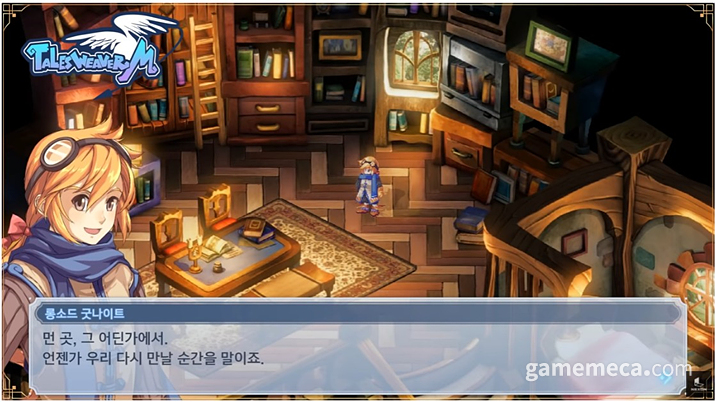
As the story builds toward its climax, the characters’ choices and emotional responses are far from simple. This is not a straightforward tale of good rewarded and evil punished. Their circumstances and conflicts intertwine to shape the story with a complexity rarely seen in online games. I think that is why particular scenes and lines of dialogue still stay with people who remember TalesWeaver’s story.
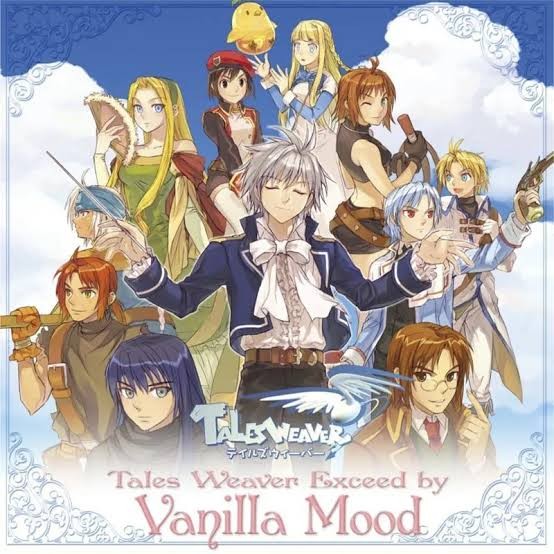
The second reason TalesWeaver means so much to me is its soundtrack. It was the first game whose music kept playing in my head even after I turned it off.
I would place it among the very best Korean game soundtracks—a list short enough to count on one hand. The music is so well crafted that tracks are often used in broadcast television variety shows and elsewhere. As I played, it never felt like something merely playing in the background; it suited each situation and heightened what I was feeling. From tense battles and the story’s climactic moments to quiet breaks in town, each piece was tailored to the scene, drawing me further into the game.
The fact that I began seeking out the TalesWeaver soundtrack to listen to separately says a great deal. Wanting to hear that music outside the game meant it had become a work in its own right, rather than just background sound. Even long after I stopped playing, hearing the TalesWeaver soundtrack brings back memories and scenes from those days. The music and my memories of the game are firmly bound together.
Each area and dungeon has its own music, and the track that greeted me when I entered a map often seemed to capture that place’s atmosphere perfectly. Before anything else, the music told me what kind of place I had entered and where the story was heading emotionally. TalesWeaver was the first game that made me feel that background music could be part of the storytelling, rather than simply sound filling the silence.
What made TalesWeaver special was not just a good story or good music, but the experience of the two coming together. There are scenes where the soundtrack swells as the story reaches its climax, bringing all its emotion to the surface. Time and again, a character would make an important decision or an emotional scene would unfold, and the music accompanying it would bring those feelings rushing in all at once.
In those moments, I felt much less as though I was playing an online game than as though I had stepped inside a story. The story and music reinforced each other: the music heightened the story’s emotional impact and made those feelings stay with me more deeply. That kind of experience is hard to find even in most standalone games.
Over time, those experiences made TalesWeaver more than a game I enjoyed. It became a memory with real emotional weight. Even after I stopped playing, talking about it would bring back the feelings I had then. To me, that is a sign that TalesWeaver has stayed with me as an experience, not just a form of entertainment.
If you are looking for a game where story and music work together, TalesWeaver is still well worth experiencing. As one of Nexon’s 5 classic RPGs, it is also a game I would recommend to anyone who wants to experience the history of online RPGs firsthand.
![[피크 챌린지] 마비노기 모바일의 인게임 정보 시스템](https://peak-file.nexon.com/uploads/20260721_0636_4ccf1ba2.png)
![[피크 챌린지] 그랜드 체이스에서 엘소드까지](https://peak-file.nexon.com/uploads/20260801_0325_6336c99d.png)
![[피크 챌린지] 과거 PC RPG vs 현재 PC RPG](https://peak-file.nexon.com/uploads/20260626_0732_112a0cf8.webp)
![[피크 챌린지] 페리온에서 만난다는 그 유령, 메이플스토리 화이트레이디 괴담](https://peak-file.nexon.com/uploads/20260713_0240_4768e679.jpg)