[PEAK Challenge] Today, once again, I’m doing my daily homework. I just do it... simply because I do.
자경씨
![[PEAK Challenge] Today, once again, I’m doing my daily homework. I just do it... simply because I do.](https://peak-file.nexon.com/uploads/20260709_0756_2a5601e3.png)
I’m currently participating in the [Nexon PEAK Post Challenge].
When you play games, chores inevitably come with the territory. The cadence varies, of course. Some need to be done every day, some anytime within the week, and some only by the end of the month. From my experience, the most representative weekly chore is probably raid progression. Which also means daily chores tend to be the more routine, everyday kind.
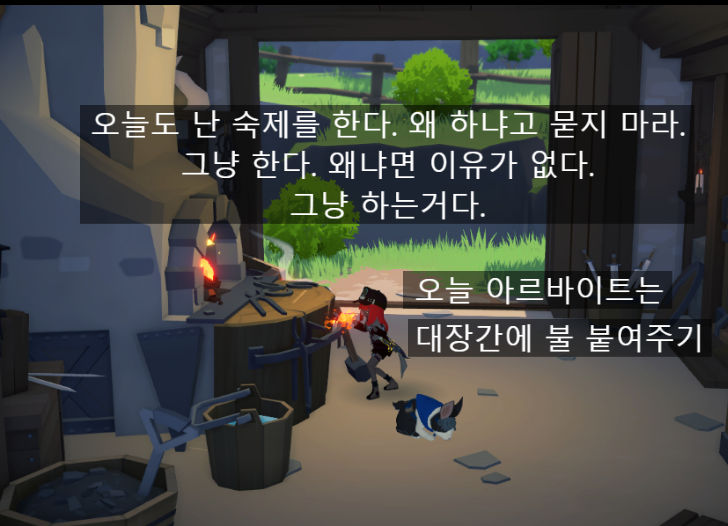
When I think of a game with very light daily-chore pressure, the first one that comes to mind is Reverse: 1999. Out of everything I’ve played, it’s the easiest game to wrap up dailies in. After logging in, tap the character standing in the center of the lobby and exchange greetings. Then head into the Wilderness.

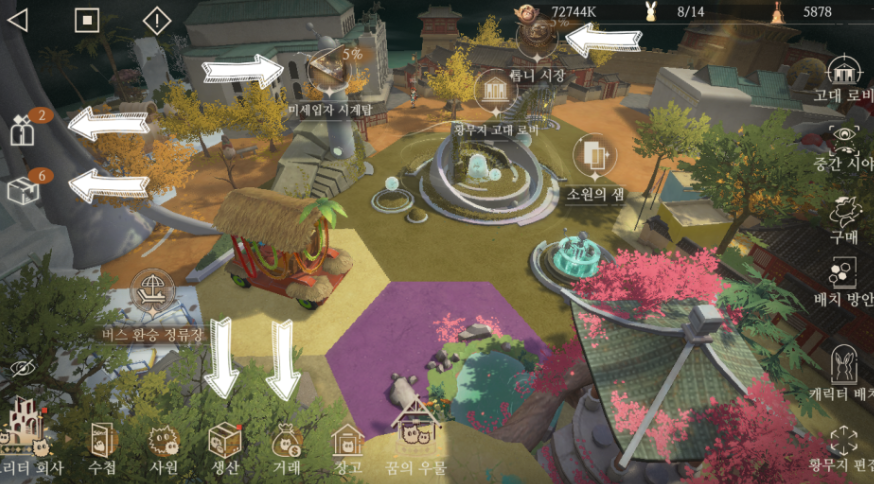
Once you’re in the Wilderness, you can collect the materials that have built up at the Micro Particle Clocktower and the Gear Market. Tap the character icon and the box icon on the left, and your resident characters’ trust goes up automatically. After that, hit the production button to gather the finished goods, then go into trading and clear four trades with a few taps. Then return to the lobby.
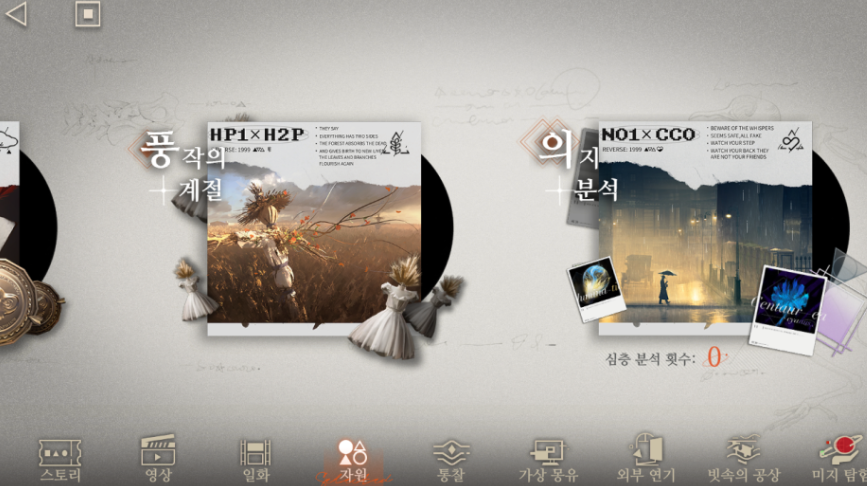
From the main screen, go to Enter - Resources - Analysis of Ennui. Use the 2 free daily runs plus 50 Energy for one set of 4 Analysis runs, then do one more with 100 Energy, and that finishes all your daily quests. That’s it for the daily routine. I honestly haven’t seen another game make it this simple. Even so, it never feels like dailies are pointless, probably because they’re quick and then leave you free to focus on other content.
It’s also relatively easy to finish both daily and weekly activities, which makes item and material income easy to maintain too. Since the game updates almost every two weeks, even if the daily chores are simple, there’s still plenty to do, so it ends up being a smooth and reliable way to keep your materials stocked.
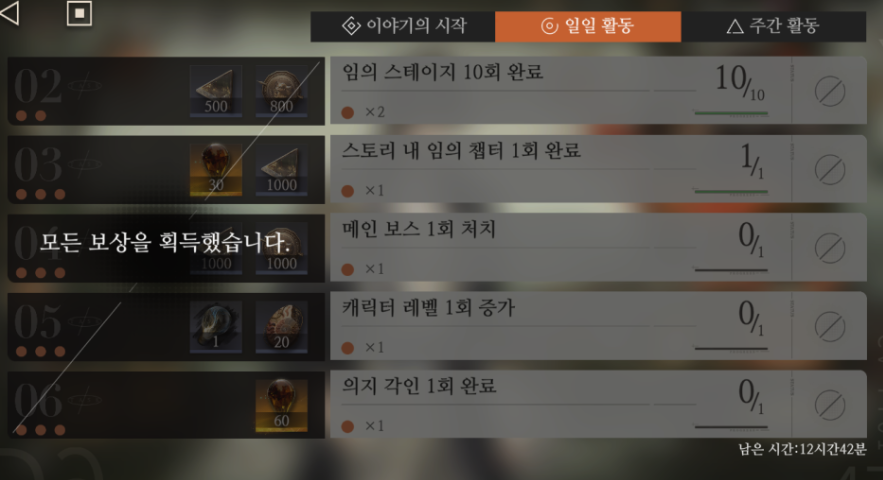
So then, aside from Reverse: 1999, what other games let you get through your dailies with only a short time investment? I’d definitely put Mabinogi Mobile on that list. Basically, you only need to complete 6 tasks to get the core rewards, and since you just have to clear 6 or more out of 11, it’s very manageable. Better yet, simply logging in gives you 1, doing alchemy by combining gems or runes in your bag gives you 1, just eating gives you 1, doing a part-time job gives you 1, gathering around three materials gives you 1, and running a dungeon or hunting a few monsters gives you 1 each as well.
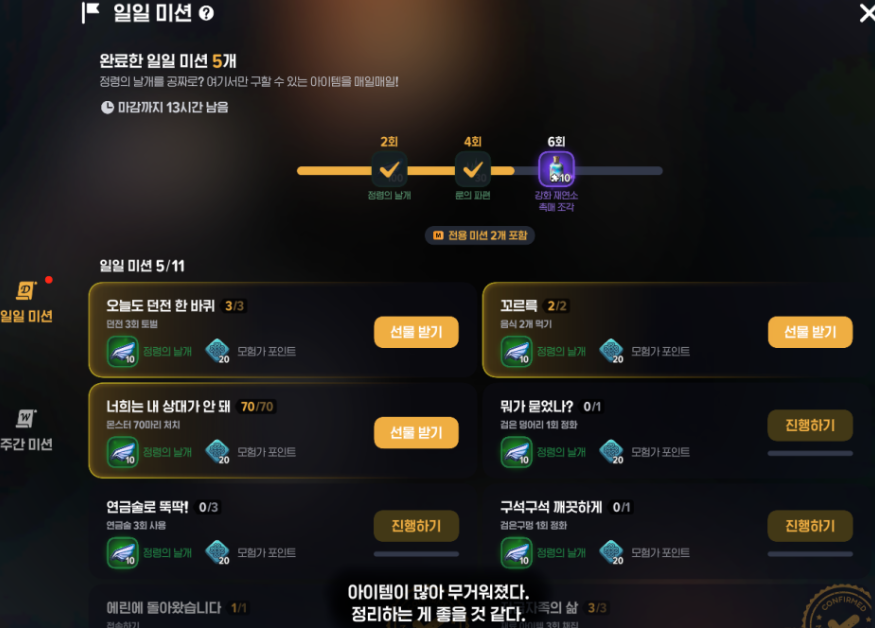
In other words, if you’re actively playing Mabinogi, the game naturally puts you in a position where you’ll complete the daily quests almost without trying. To be honest, early on in Mabinogi Mobile, Black Hole and Summoning Barrier felt a bit burdensome. They were a little too tight to keep treating as daily chores. The Barrier only opened once an hour, and Black Hole appeared and disappeared on a cycle, with any location you had entered once becoming unavailable again. Even for me, and I play every day, that could feel a bit tight sometimes. So for light users, it must have felt even more demanding. If you missed them, you simply lost out on that much reward.
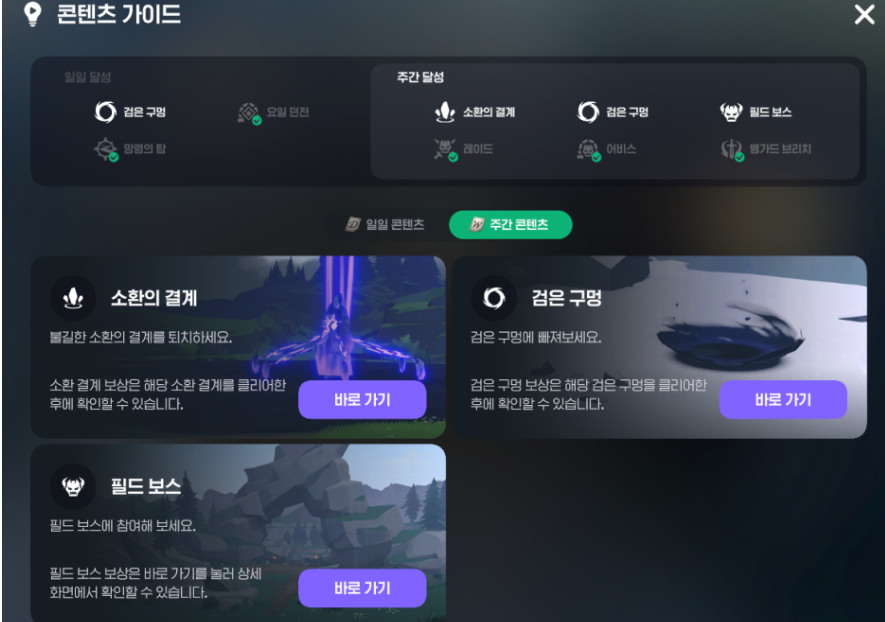
Now, though, that worry is gone. Black Hole and Summoning Barrier, which were a little heavy for daily-chore content, were changed into weekly chores instead. In other words, the game was adjusted so you can batch them in one day whenever you have the time. I think that was the result of the team listening to player feedback and giving it real thought. On top of that, there’s also a system where you can collect Monster Extermination Tokens to make up for missed weekly progress. The in-world logic is a nice bonus too. This really is the kind of work the Adventurer’s Guild should be handling—exactly.

Daily chores are a double-edged sword. They’re the easiest way to gather the items you need in-game, and at the same time they become the engine that keeps you coming back every day. That’s exactly why games have to keep thinking carefully about them—so those chores become motivation to keep playing rather than a reason to stop. Compared to a completely free-form game where nothing in particular is waiting for you, logging in and having something to do can definitely give you that extra push.

If you don’t claim it after completing the mission, it gets sent by mail the next day.
However, if they become excessive—or if the repetitive tedium starts to stand out more than anything else—that’s what eventually makes people put a game down. At that point, it turns into exactly what the word implies: a real “chore,” the kind you used to dread in everyday life. You don’t even want to look at it, let alone do it, and that drains both enjoyment and motivation. The same goes when the reward is too small for the effort required. The moment you start thinking, “I put in all that work? I spent this much time and attention on it, and this is all I get?” that motivation just disappears. Giving players the right amount of momentum while still preserving the pleasure of earning rewards—that might be the real big homework assignment in game design.

![[피크 챌린지] 모비노기 vs 스포츠 게임](https://peak-file.nexon.com/uploads/20260618_0901_7053537b.png)
![[피크 챌린지] 수집에 진심이 되는 이유, 마비노기 모바일에서 모아보자](https://peak-file.nexon.com/uploads/20260803_0454_a68e01d5.png)
![[피크 챌린지] 지금은 모비 복귀 최적의 타이밍](https://peak-file.nexon.com/uploads/20260618_0737_609f175a.png)
![[피크 챌린지] 마비노기 모바일 찍먹하러 왔다가 부먹하게 되었다.](https://peak-file.nexon.com/uploads/20260717_0733_94354c43.png)