[PEAK Challenge] How PC Online Games Have Changed: MapleStory Felt Noticeably Different When I Returned
폭풍같은주황호랑이31281

[Taking part in the NEXON PEAK Post Challenge]
https://peak.nexon.com/post/1861
Hello, I’m 에드가.
When you’ve been playing games for a long time,
a certain thought comes to mind now and then.
“Games really are different from how they used to be.”
I don’t just mean that the graphics have improved.
The way we log in,
the way we keep up with events,
the way players find information,
and our whole approach to games have all changed considerably.
When I saw the topic #PC온라인게임변화,
MapleStory was the first NEXON game that came to mind.
MapleStory is a long-running PC online game.
If you’re in your late 30s like me,
you probably played it at least once when you were young,
or at least remember watching a friend play.
For a long time, I remembered MapleStory
as simply a game about hunting monsters, leveling up, and getting gear.
I still remember what it felt like to create my first character,
hunt Slimes and Pigs,
and settle into a spot on a hunting map for a long session.
PC online games were much simpler back then.
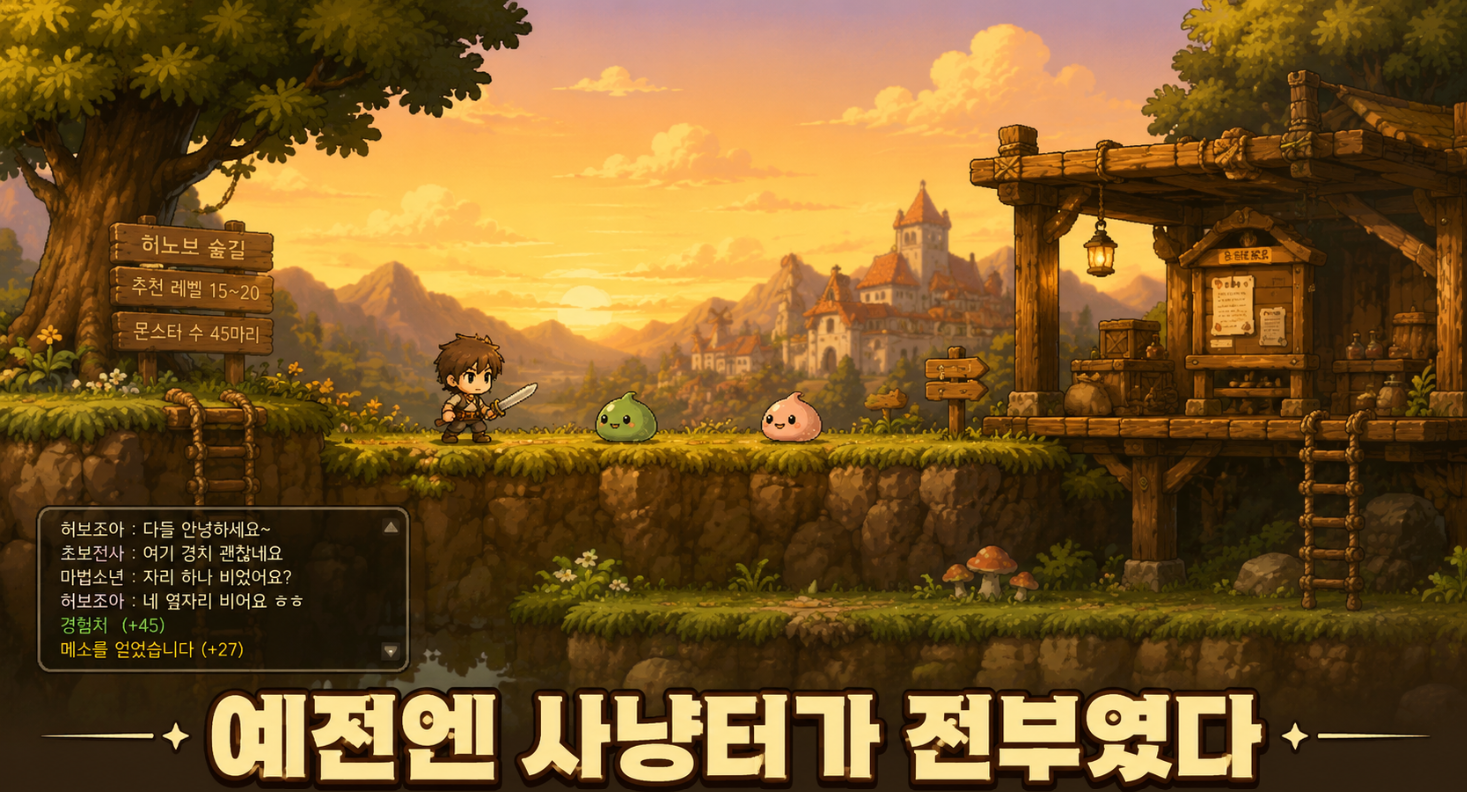
We logged in and headed to a hunting map,
chatted with friends if they were around,
and felt good when we leveled up.
Information wasn’t as neatly organized as it is now,
so we often asked friends, searched community posts,
or figured things out by trying them ourselves.
But when I look at MapleStory these days,
it’s clearly quite different from the game I remember.
The first thing I noticed
was that PC online games are no longer just about “staying logged in and hunting for hours.”
In the past, the people who spent the most time at their computers pulled far ahead.
Of course, investing time still makes for strong characters.
But rather than simply playing for hours on end,
it now matters much more how you make use of events,
how you plan your progression,
and which character you choose to receive the rewards.
When I logged in after a long break,
rushing to a hunting map wasn’t the first thing I did, either.
I checked the event page first.
I found myself checking which events were running,
whether there were check-in rewards,
whether progression support was available,
and whether I’d be better off starting a new Burning character
or getting an existing character back into shape.
We used to start by jumping into the game and learning as we went.
These days, there are plenty of choices to make before we even begin.
At first, this felt a little complicated.
I even found myself thinking, “Why is there so much to keep track of?”
But after a few days of playing,
I began to see it as part of how PC online games have changed.
Rather than leaving players on their own
with a simple “Go hunt and figure it out,”
game companies seem to be offering some guidance along the way.
This makes quite a difference, especially for returning players.
When you come back after a long break,
it’s hard to know what’s good now,
which character to build up,
or what level to aim for.
But with Burning or progression events,
you can follow the path they offer and ease back into the game.
That’s a significant change from the past.
PC online games used to leave you with a strong sense
that starting late meant struggling to catch up.
There’s certainly still a gap today,
but I feel there are at least more ways to get a fresh start than there used to be.
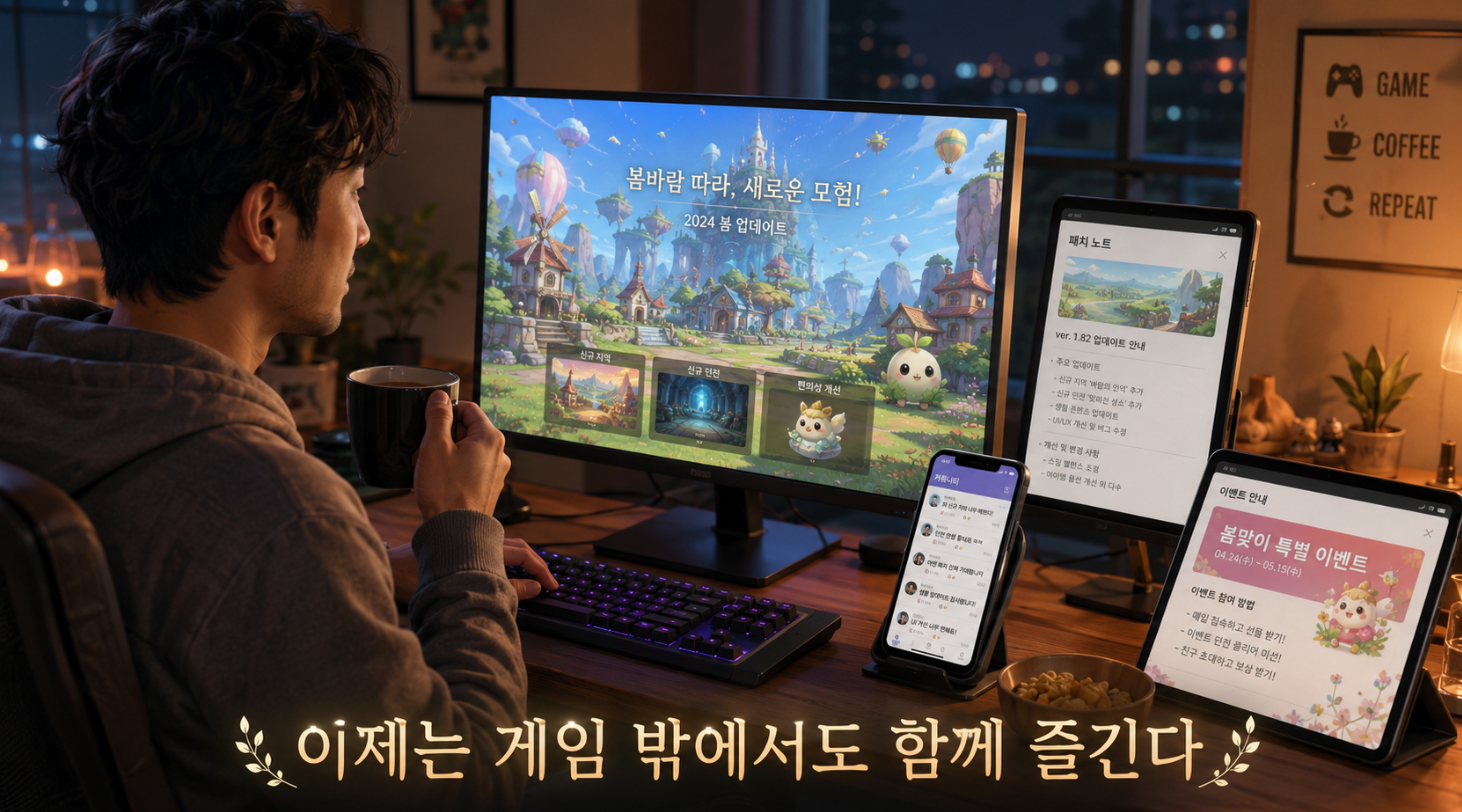
The second change I noticed
was how much more time we spend engaging with games outside the games themselves.
In the past, playing a game meant logging in.
These days, even when we aren’t logged in,
we’re still seeing update news, showcases, event announcements, and player reactions.
MapleStory is no exception.
When a major update arrives,
there’s more to it than what happens in the game.
We also find ourselves following showcases, videos, announcements, and community reactions.
In the past, a patch would arrive,
and we’d log in to see what had changed.
These days, anticipation starts building before the update.
What will be added,
what the rewards will be,
and what players are looking forward to—
those conversations begin outside the game before the update even arrives.
That’s a definite change.
A PC online game no longer feels like just a program you launch,
but an ongoing stream of live content.
A culture has emerged around waiting for updates
as we would a new season of a TV series,
watching showcases like trailers,
and sharing reactions on streams and in communities.
I find this quite interesting.
In the past, we had to launch the game to feel like we were playing.
These days, it can feel as though we’re already part of it without even opening it.
The third change is quality of life.
Honestly, in older PC online games,
inconvenience often felt like part of the experience.
We put up with getting around being a hassle,
had little choice but to get used to complicated systems,
and spent a lot of effort on trading and managing items.
These days, though, players don’t simply accept those inconveniences.
They speak up as soon as something feels cumbersome,
and game companies keep making adjustments.
Given how long MapleStory has been around,
parts of its old structure are still in place,
but there’s a clear, ongoing effort to revise and refine its systems.
I think this is especially important for long-running PC online games.
New games can be built around current approaches from the start,
but older games have to work with the systems they already have.
If those systems never change,
it becomes difficult for both new and returning players to get into the game.
That’s why I think the older a game gets,
the more quality-of-life improvements become not just a welcome extra,
but an essential part of keeping it alive.

The fourth change is in how people play.
In the past, players who put in long hours seemed impressive.
Hunting all night,
leveling up quickly,
and getting good gear before everyone else all seemed like remarkable achievements.
Those players are still impressive today.
But when I look at the people around me,
I see a much wider range of ways to enjoy a game.
Some put all their effort into a single main character,
some level a new character with every event,
some enjoy dressing up their characters more than fighting bosses,
and some take things slowly, simply collecting login rewards.
Where there once seemed to be a “right” way to play,
there now seems to be more room for people to enjoy games in ways that fit their own lives.
The same is true for me.
I can’t spend all day gaming the way I did in my 20s.
After work, I don’t have the energy I used to,
and there’s plenty to do on weekends, too.
So when I play games these days,
I’m less concerned with how much time I put in
than with whether I can keep playing without it becoming a burden.
That’s also how I look at MapleStory
now that I’ve returned to it.
Some days, it’s fine to just check in.
If I have time, I can do a little more of an event,
or try leveling another character when I have the time to spare.
It no longer feels like a game I have to keep pushing through as I once did,
but one I can fit comfortably into my life.
I think this, too, is a major change in PC online games.
The fifth change is community culture.
There were gaming communities back then, too.
But information travels much faster now.
When an update arrives,
summary posts soon follow,
video guides appear,
and players calculate the most efficient approaches and share their findings.
There are benefits to this, but it can also be tiring.
The benefit is less trial and error.
In the past, we often missed out simply because we didn’t know something.
These days, a quick search is usually enough to get a basic sense of what to do.
The tiring part is that,
when you’re constantly reading other people’s efficiency guides,
you can start treating the game like homework without realizing it.
I notice this in myself sometimes.
I launch a game to enjoy it,
but sometimes the first questions that come to mind are,
“Am I losing out if I don’t do this today?”
or “Would it be a waste to miss this reward?”
That’s why I think playing PC online games today
means finding a balance
between wanting to enjoy them and feeling obliged to keep up.
I think PC online games will continue moving in this direction.
Toward a model where even short sessions offer meaningful rewards,
events give returning players a way back in,
showcases and videos build anticipation ahead of updates,
and communities inside and outside the game respond together.
It’s a long way from the days of simply logging in and hunting for hours.
I don’t think this change is entirely a bad thing.
Of course, there are times when I miss how things used to feel.
I remember sitting on a hunting map with friends without a care,
passing the time in chat,
and feeling quietly proud of gaining just one level.
But today’s games have their own pleasures.
There’s more we can do in a short session,
more opportunities to return,
and more to enjoy in the anticipation of an update.
Returning to MapleStory made me realize
that PC online games haven’t disappeared.
They’ve endured by changing their form.
If PC online games of the past
were playgrounds for people who spent long hours at their computers,
today’s PC online games
are closer to living spaces we can drop into and enjoy as much as we want, around our daily lives.
To me, this feels like a realistic response to how we live.
As we grow older, have less time,
and change the way we approach games,
it’s good to know there’s still a game we can return to.
That’s why, for the topic #PC온라인게임변화,
I wanted to talk about MapleStory.
An old game, but not one that has stood still.
A game that holds on to something of its past while continuing to change with the times.
For me, MapleStory was
both the most familiar and the clearest example
of how PC online games have changed.
#NPC01
#PC온라인게임변화
#확률형아이템포함
#피크챌린지
#메이플스토리
#넥슨게임
#PC온라인게임


