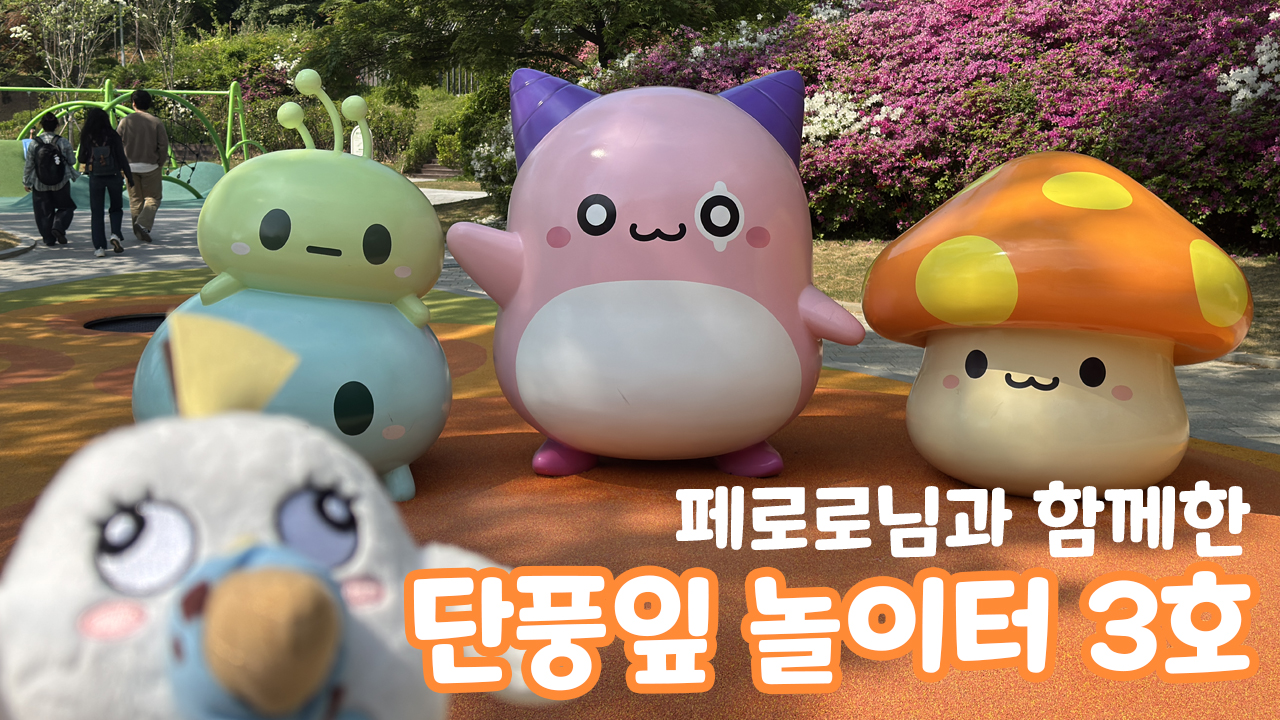
A Guide to Visiting 단풍잎 놀이터 No. 3 and Understanding Children’s Right to Play
연백
Hello!
In this post, we’ll explore Maple Leaf Playground No. 3, which opened on April 18,
and children’s right to play.
- What Is Children’s Right to Play?
Children’s right to play refers to their right to enjoy rest and leisure
and participate in cultural and artistic activities.
In other words, children should be guaranteed the freedom to engage in the many activities we call “play.”
You might wonder whether play really needs to be protected as a right.
Yet “play” is not always viewed in a positive light.
It can carry associations with being unproductive, lazy, or too relaxed,
leaving us feeling judged and under constant pressure to worry about the future.
As children, going out to play often brought comments such as:
“You should read a book or study instead.” “You can play all you want when you grow up.”
Remarks like these seemed intended to discourage us from playing.
Play is treated as something undesirable, something to put off until the future.
But we know the reality:
We have even less time to play as adults.
Our stamina cannot always keep up.
Some experiences are only possible in childhood.
Of course, childhood is an important time for study and learning,
but children also learn valuable lessons through what they feel and do while playing.
Play should therefore be protected, not simply dismissed.
Whether children gather with friends to run around and work up a sweat,
or have fun on playground equipment and try something new,
we should give them opportunities to see, feel, and experience a wide range of things through play, helping them grow up healthier.
Children should be allowed to be children. They should be free to play.
Time spent running with friends and chasing them in a game of tag deserves just as much protection as time spent at a desk with a pencil in hand.
- Maple Leaf Playground Opens to Support the Right to Play!
Protecting children’s right to play means providing places where they can do so.
To help meet this need, a new Maple Leaf Playground has opened.
There are currently 3 Maple Leaf Playgrounds.
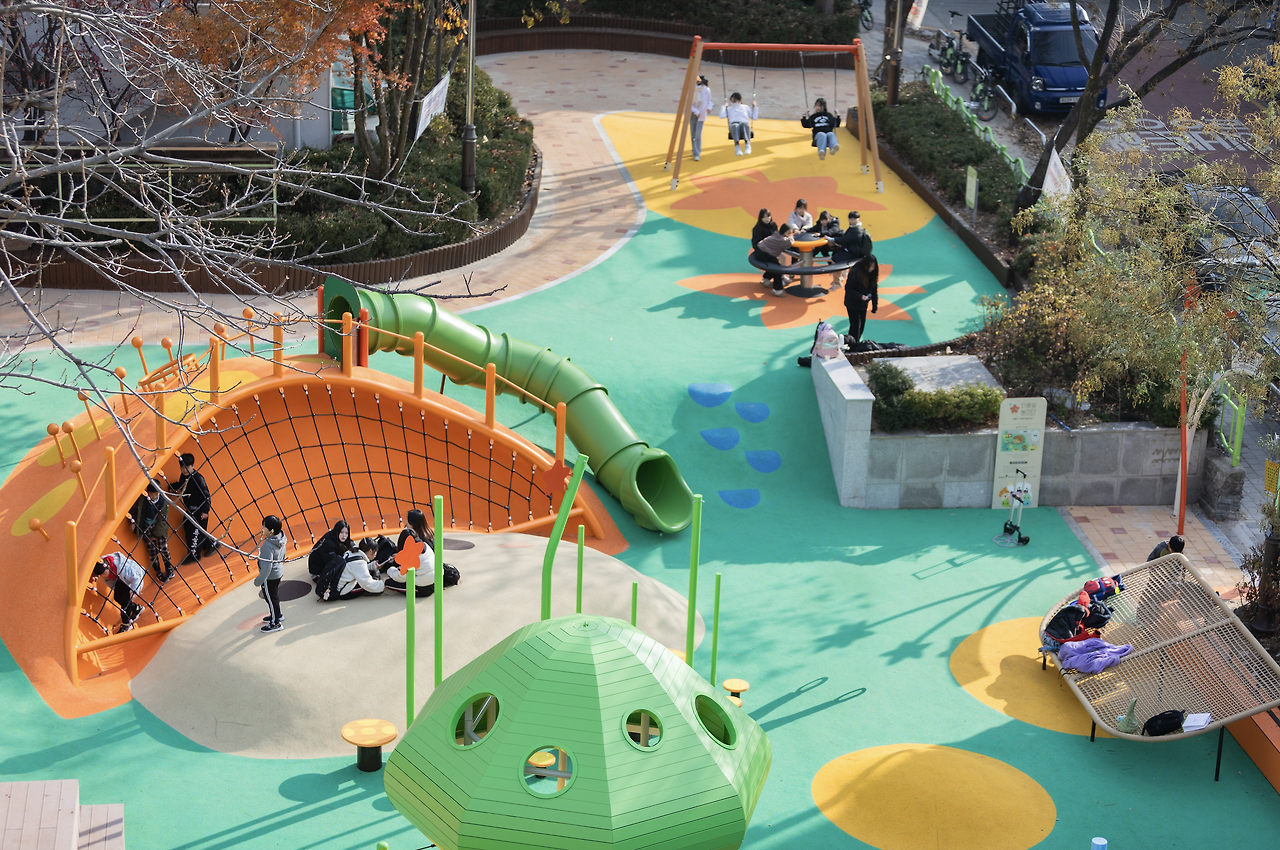
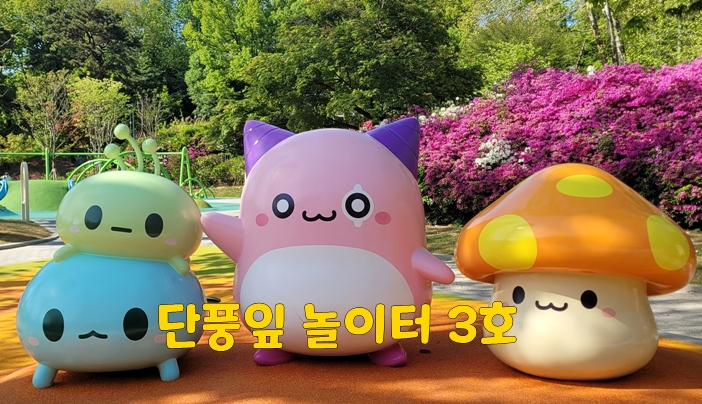
Maple Leaf Playground No. 1 is located in Seongnam-dong, Jungwon-gu, Seongnam.
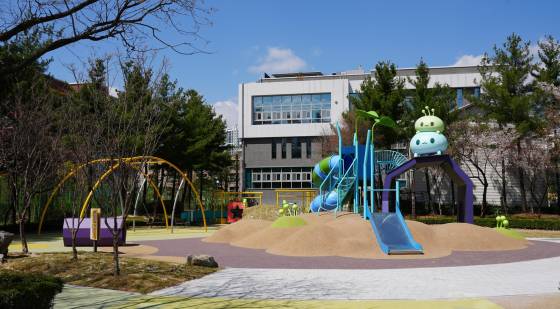
Maple Leaf Playground No. 2 is located in Singok-dong, Uijeongbu.
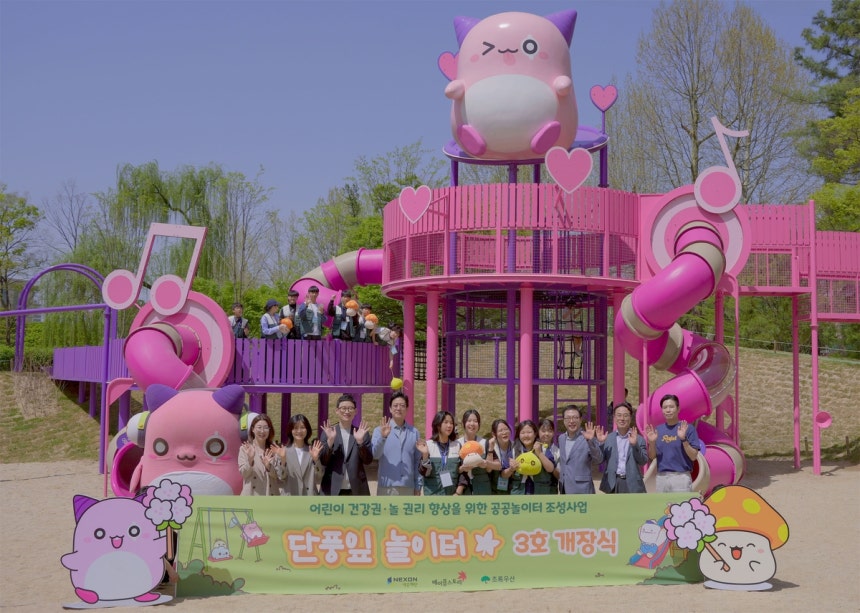
Now, at Children’s Grand Park in Neung-dong, Gwangjin-gu,
Maple Leaf Playground No. 3 has opened.
With No. 3 already open, the continued support for this meaningful project to promote children’s right to play and provide a pleasant play environment
strikes me as a clear sign of the care being shown for children.
- A Visit to Maple Leaf Playground No. 3
I made the long trip to visit Maple Leaf Playground No. 3.
Until then, I had only followed the news through articles. This time, I had a chance to visit in person, setting my age aside for a moment.
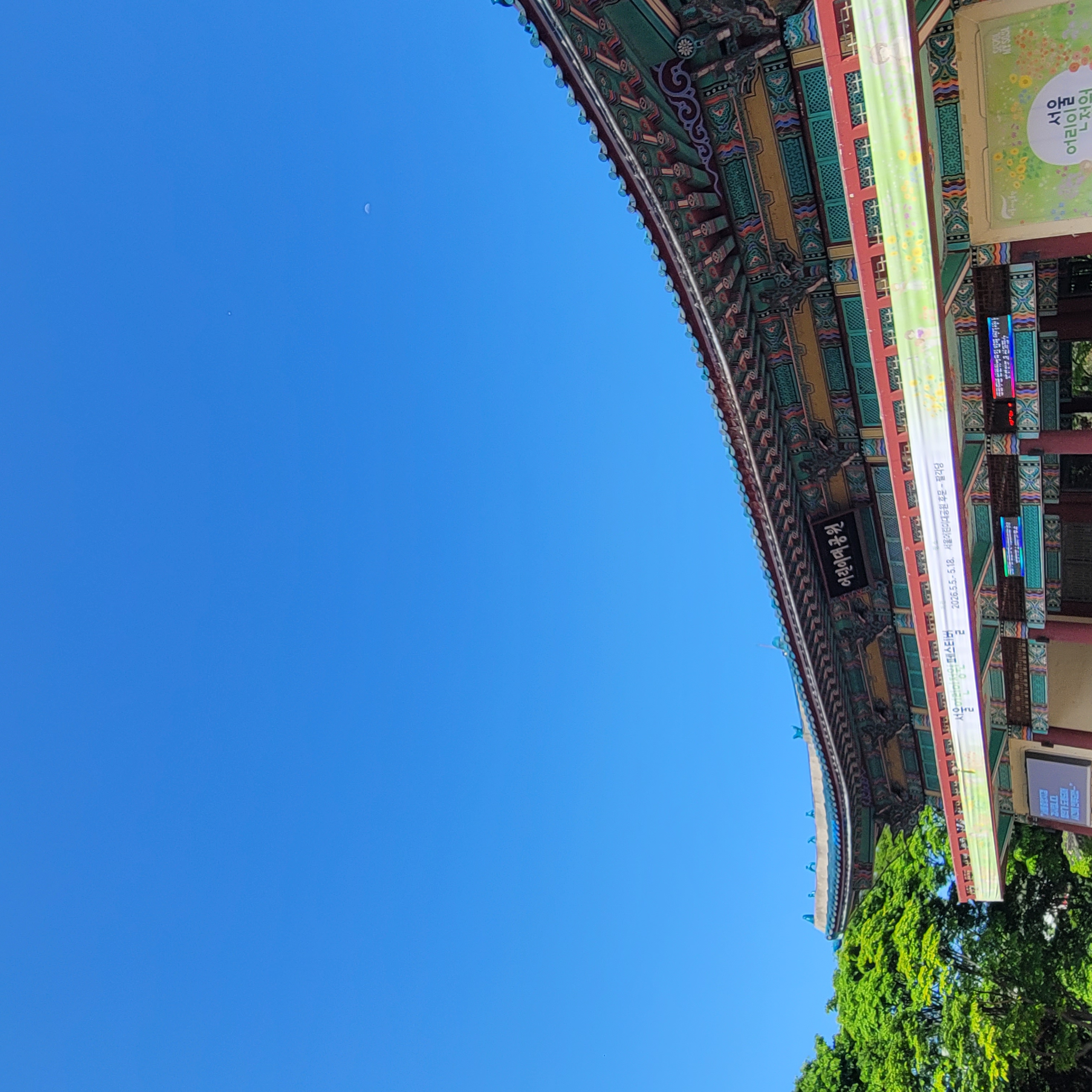
Fine dust had made the weather unpleasant for some time,
but the skies were wonderfully clear that day—perfect for an outing. (Though it was a little hot.)
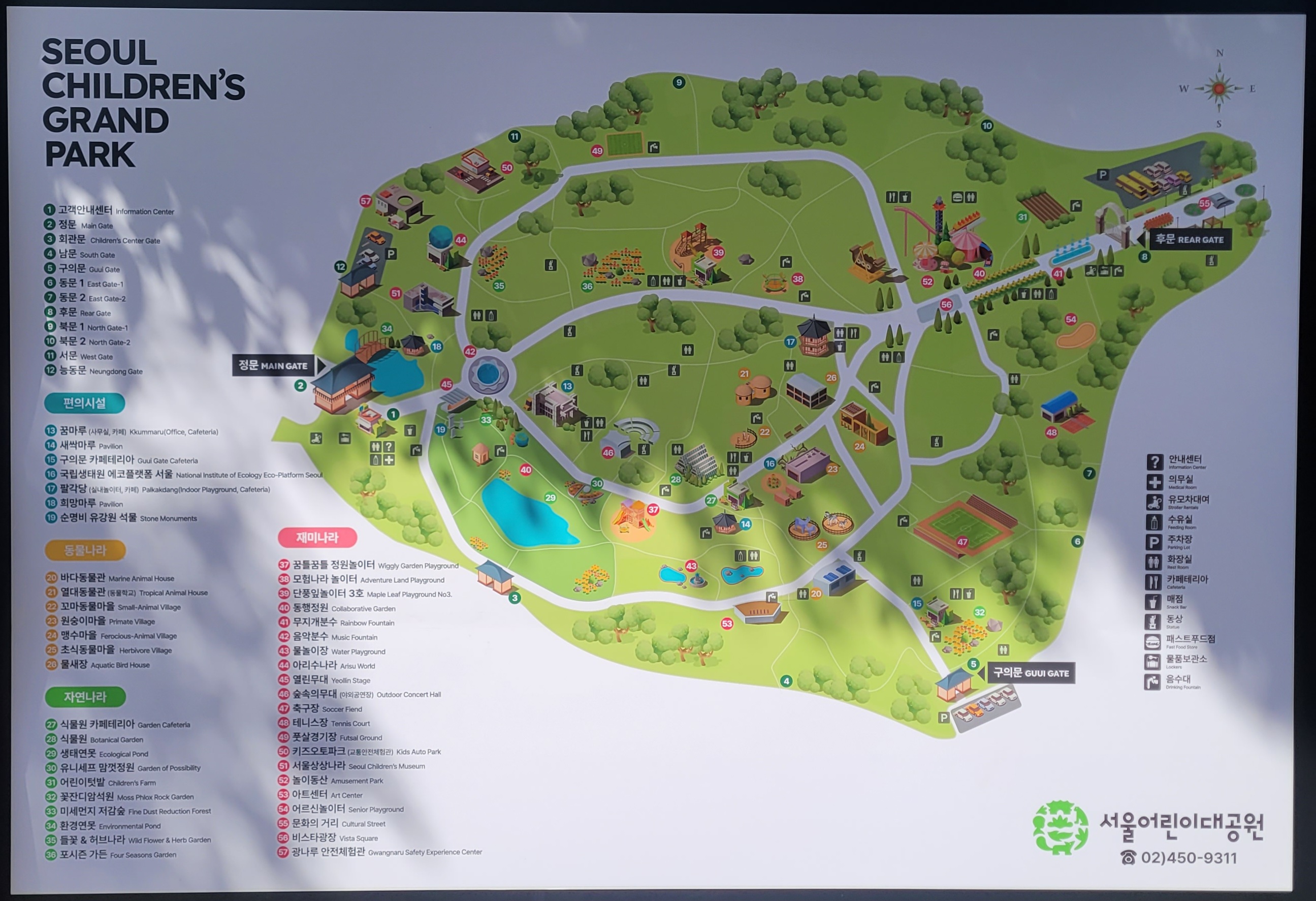
This map of Seoul Children’s Grand Park stands beside the main entrance.
A closer look reveals No. 39, Maple Leaf Playground No. 3 on the map.
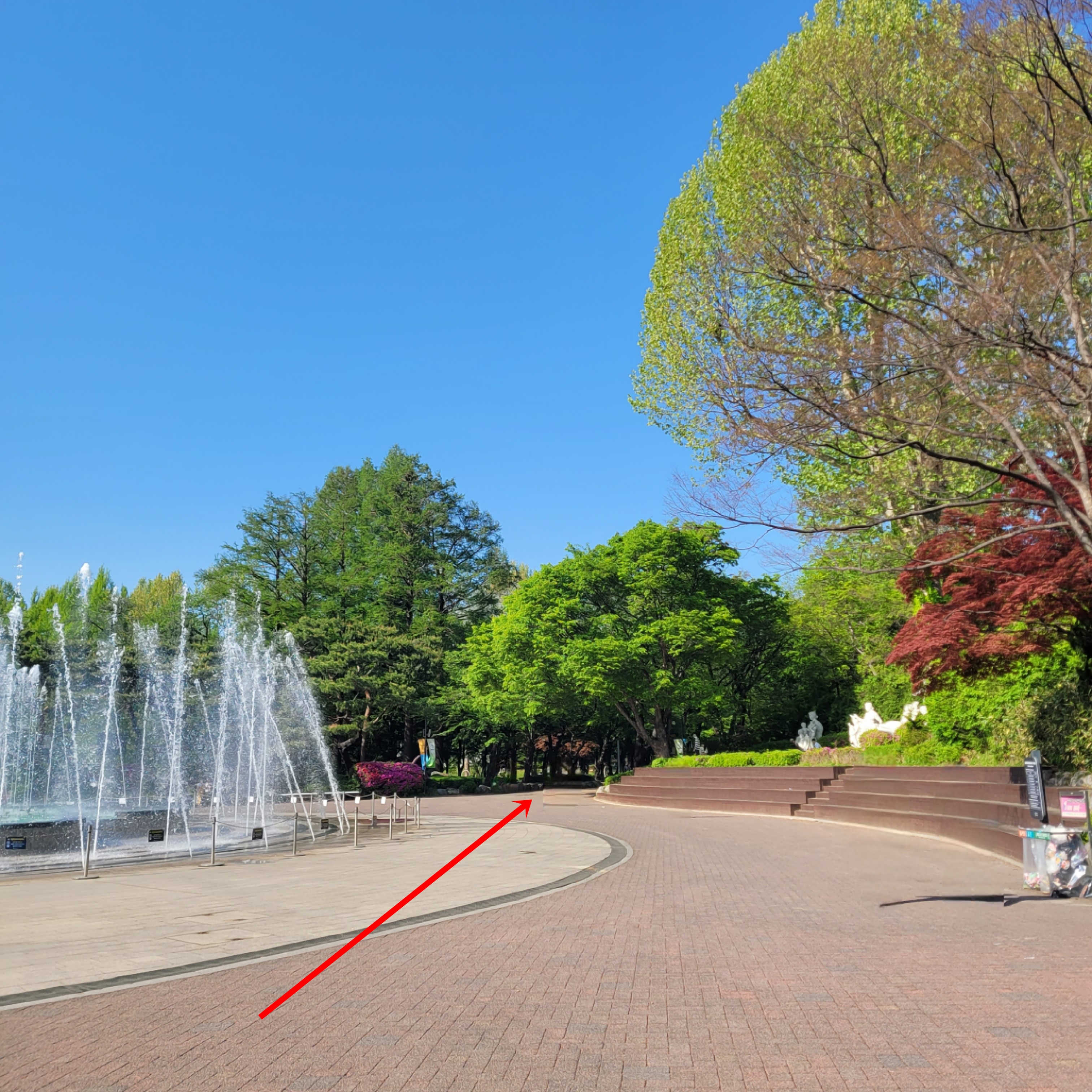
Simply follow the level path straight ahead from the central plaza, where the musical fountain (No. 42) is located,
and you should have no trouble finding it.
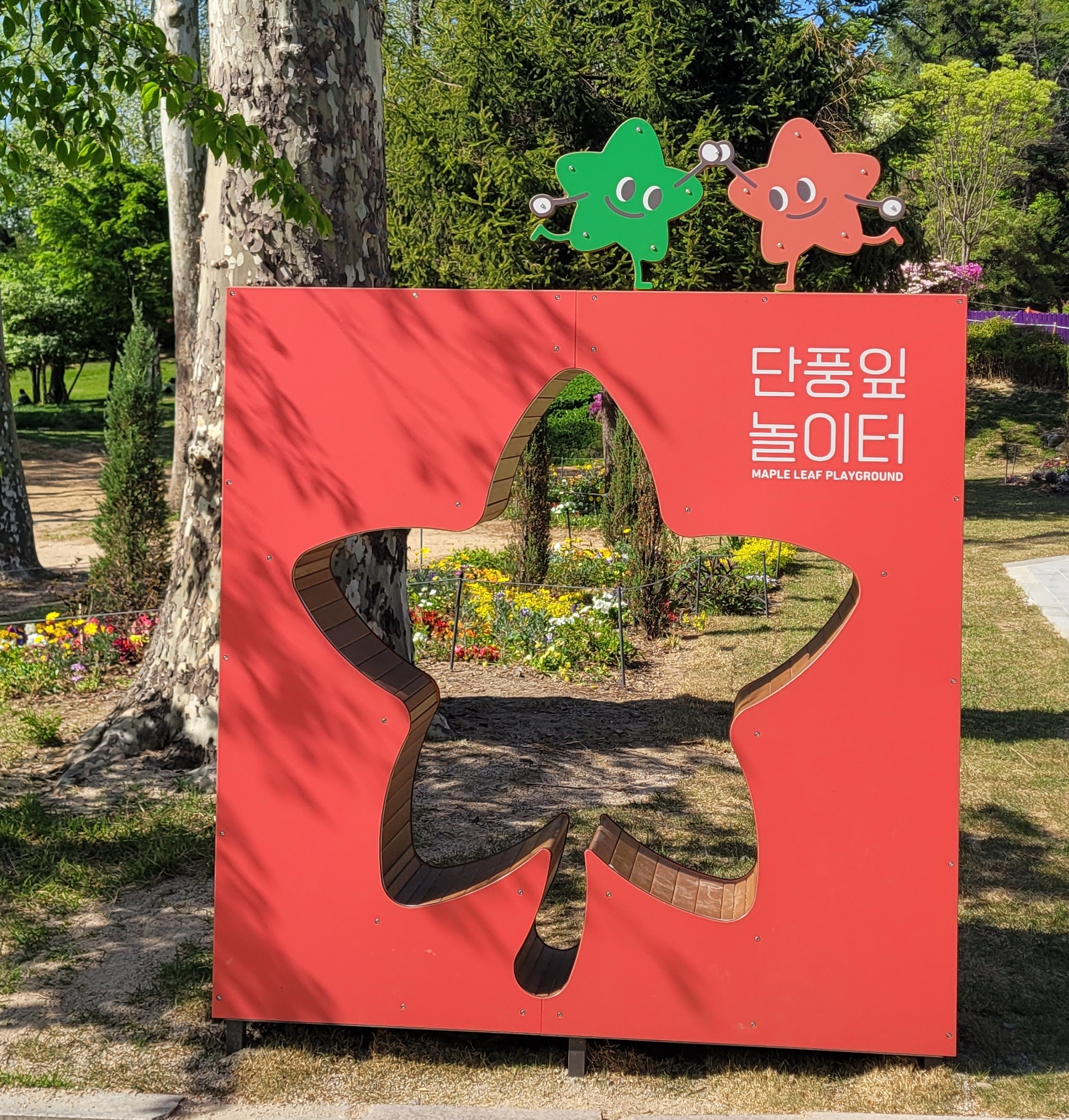
Maple Leaf Playground offers a welcoming sight on arrival.
Children were already standing here to have their pictures taken.
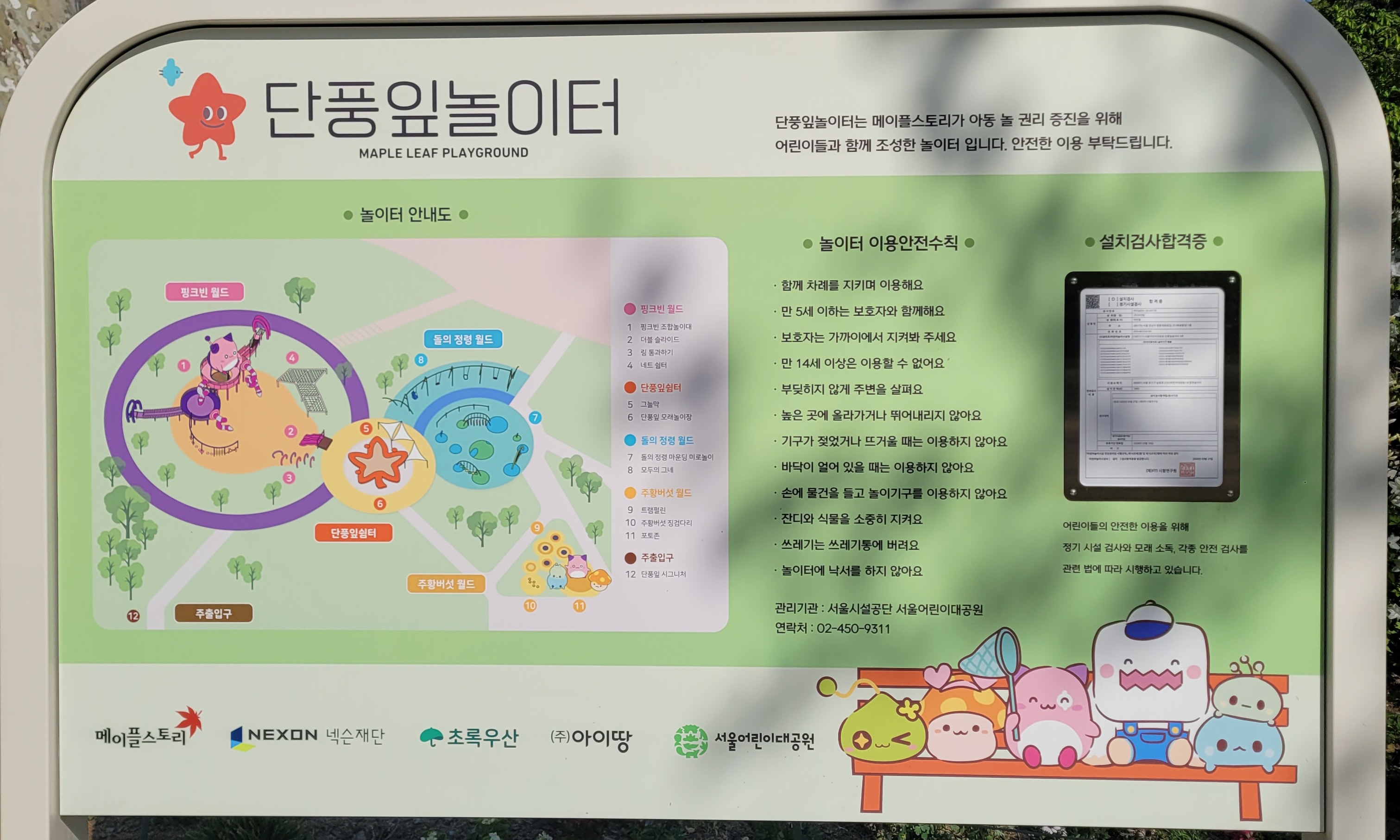
Here is a map of the full playground.
I was surprised by how spacious it was, then by the variety of play equipment,
and finally by the emphasis on safety: a certificate confirming that the installation had passed inspection, along with information highlighting the facilities’ upkeep.
There was something unexpectedly moving about seeing a new playground large enough for so many children to run around.
Now, let’s take a closer look at the play equipment.
- Pink Bean World
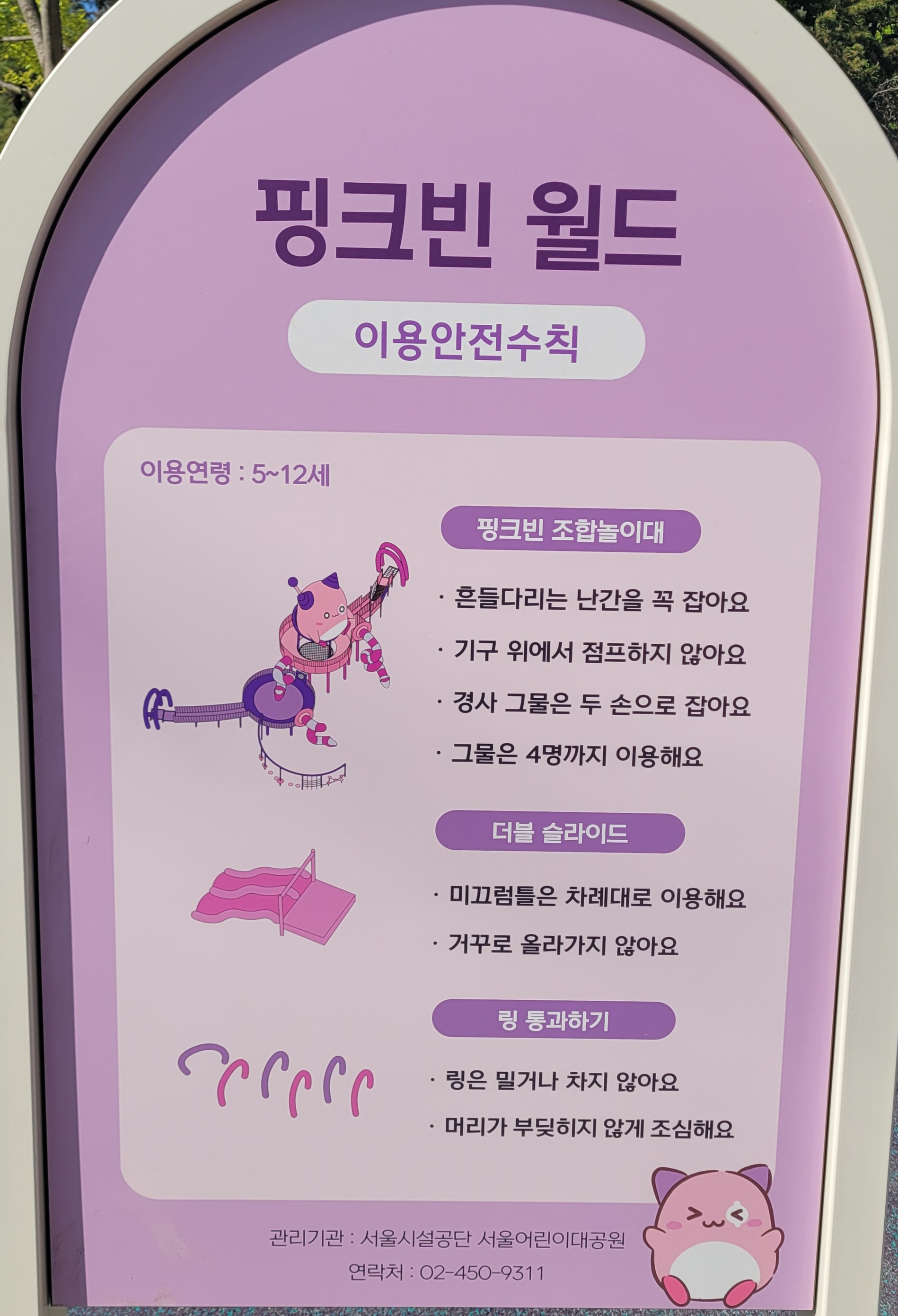
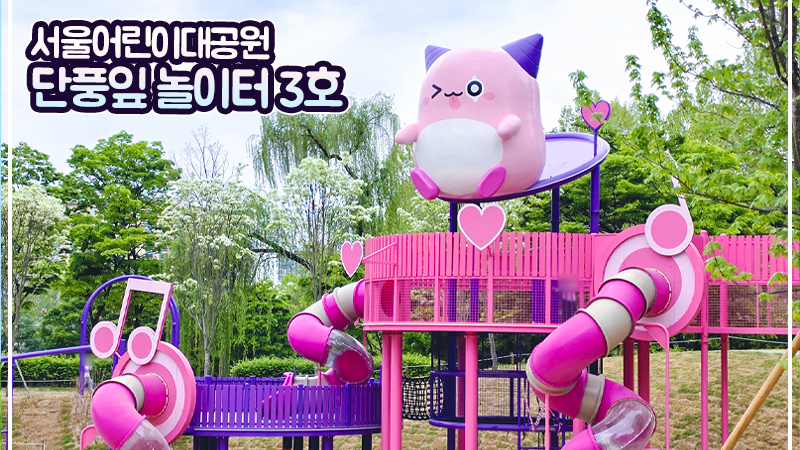
Pink Bean World has various smaller pieces of play equipment arranged around a central play structure,
along with that playground essential: a slide.
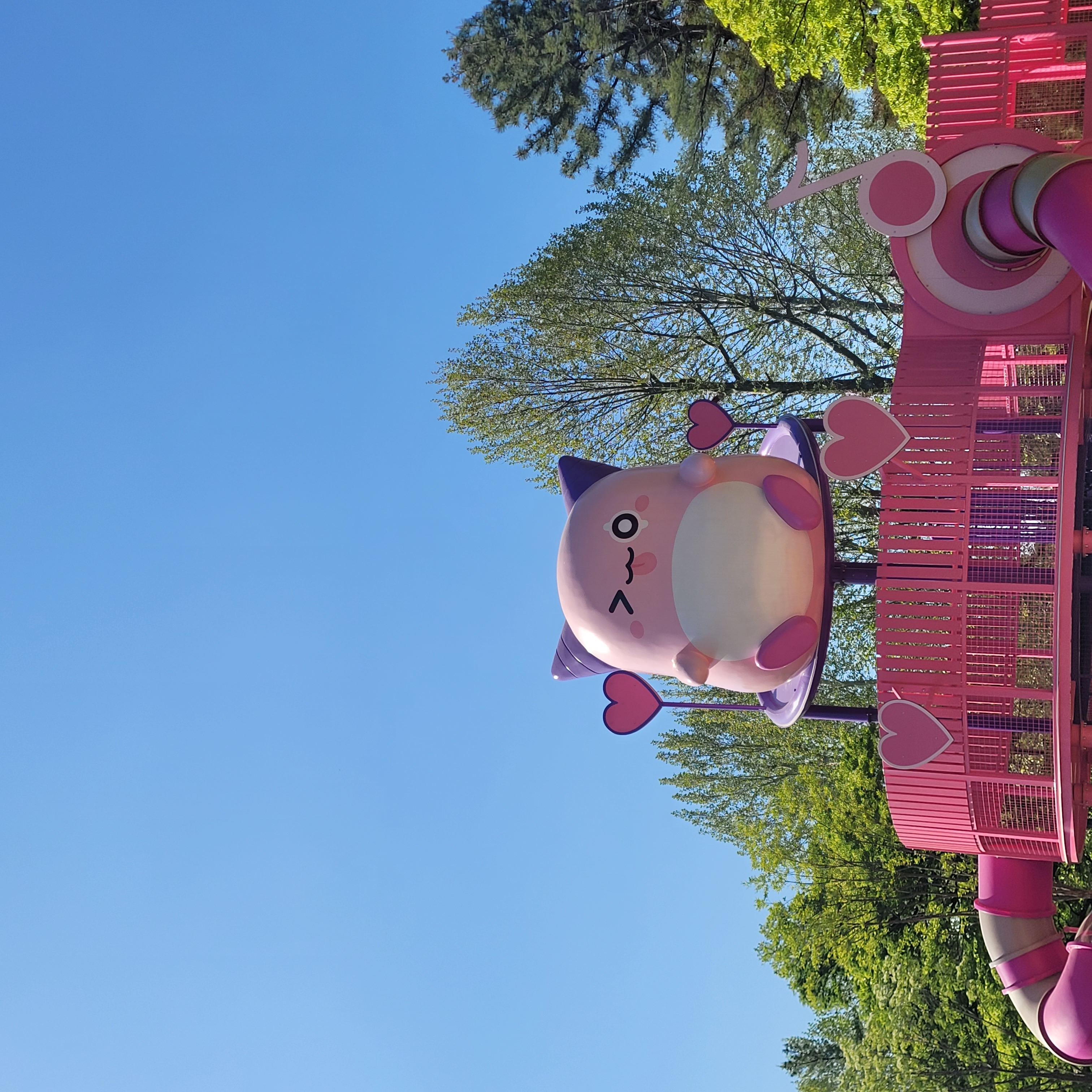
At the top, Pink Bean greets visitors with an adorable expression.
That sight alone made me glad I had come.
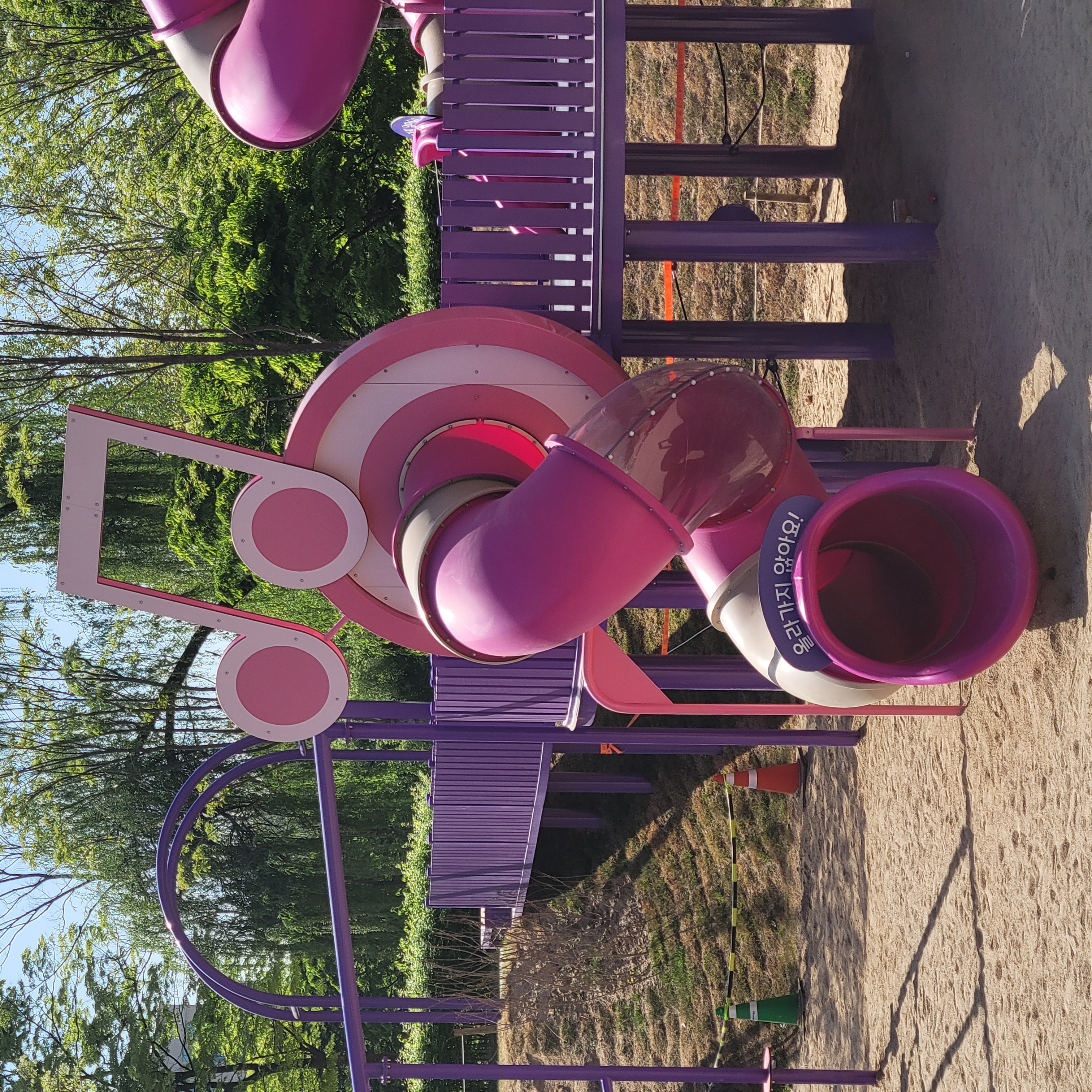
The spiral slide has a warning sign telling visitors not to climb up it.
As a child, I sometimes climbed slides in reverse, like a salmon swimming upstream,
but this is dangerous and best avoided.
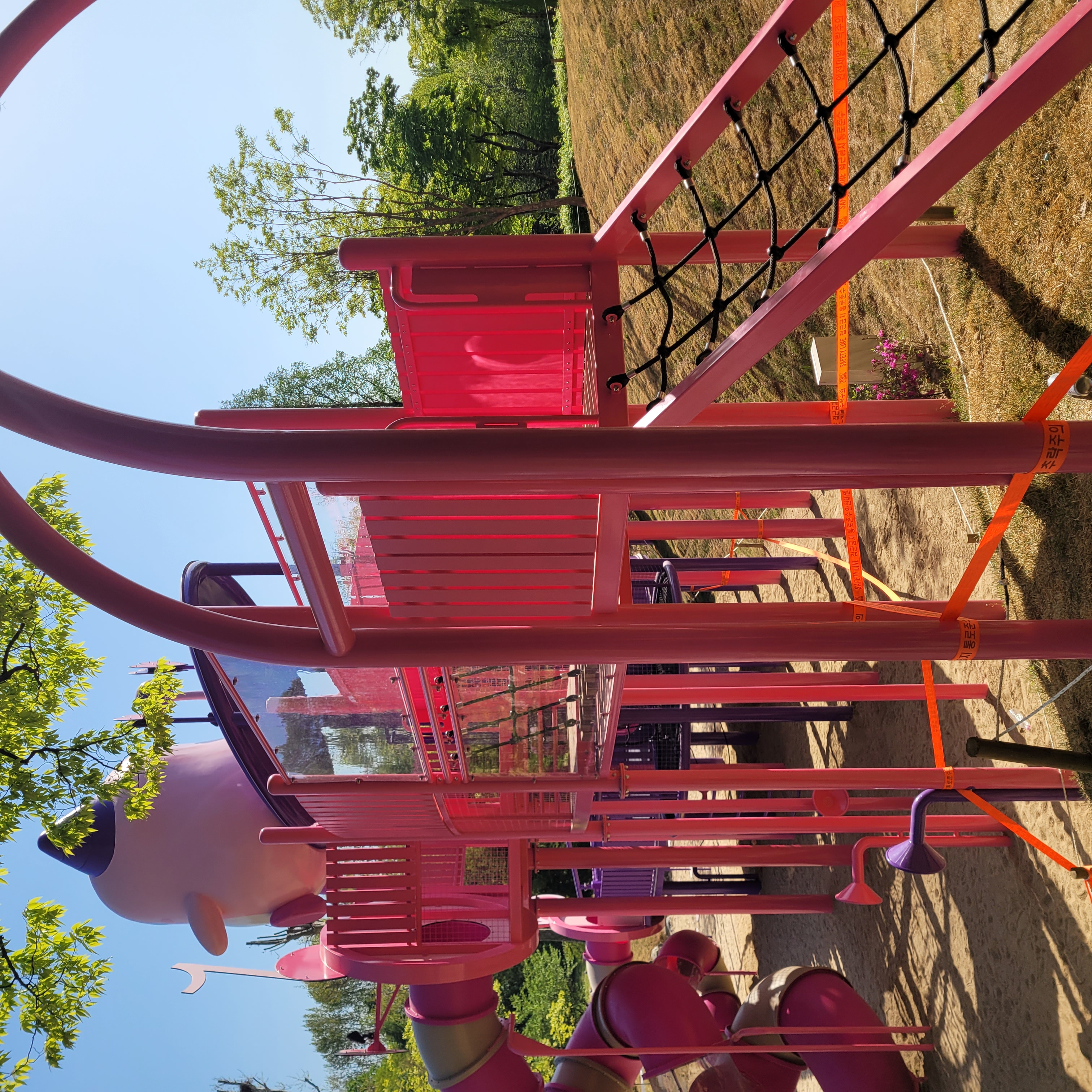
The structure is taller than you might expect, which may raise some concerns about safety.
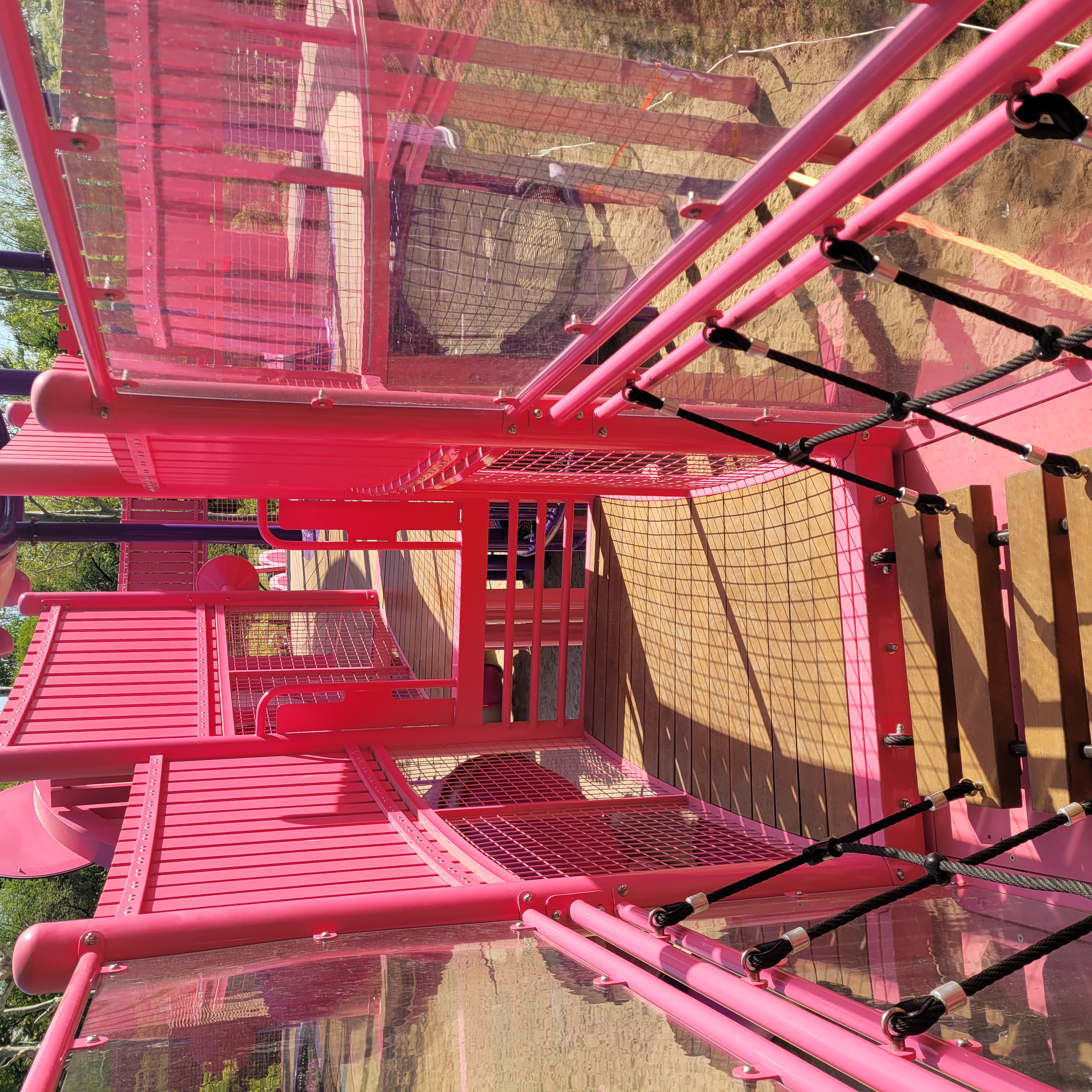
However, each platform has railings to help children play safely.
I would have liked to take the slide down,
but, mindful of being an adult, I climbed back down instead.
- Maple Leaf Rest Area
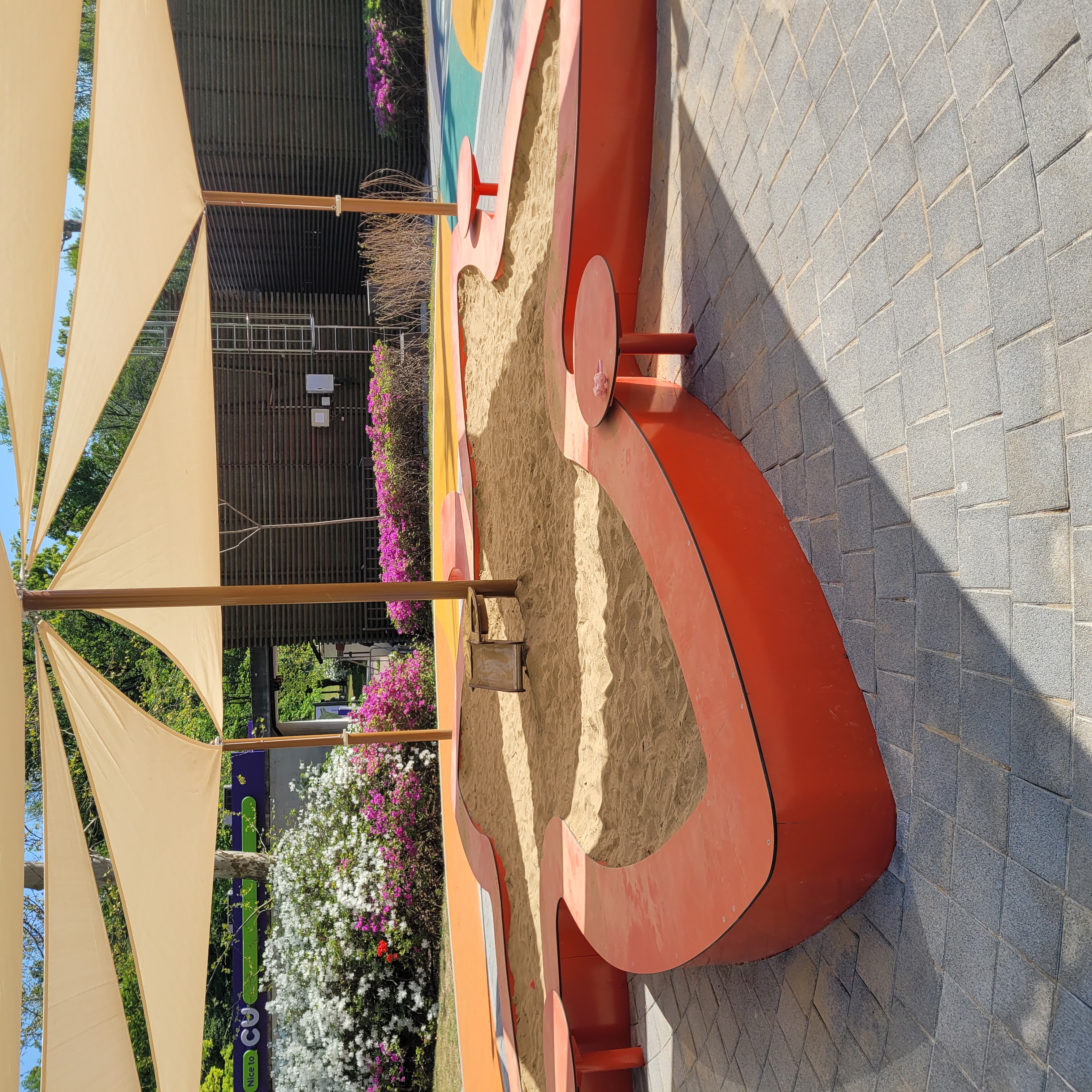
Next is the Maple Leaf Rest Area, at the center of the playground.
A large canopy provides shade over another playground staple: sand.
Sand can easily become dirty in various ways, making it difficult to maintain and raising concerns about injuries.
Playgrounds are therefore increasingly switching to rubber surfacing, and I have found the resulting decline in opportunities for sand play disappointing.
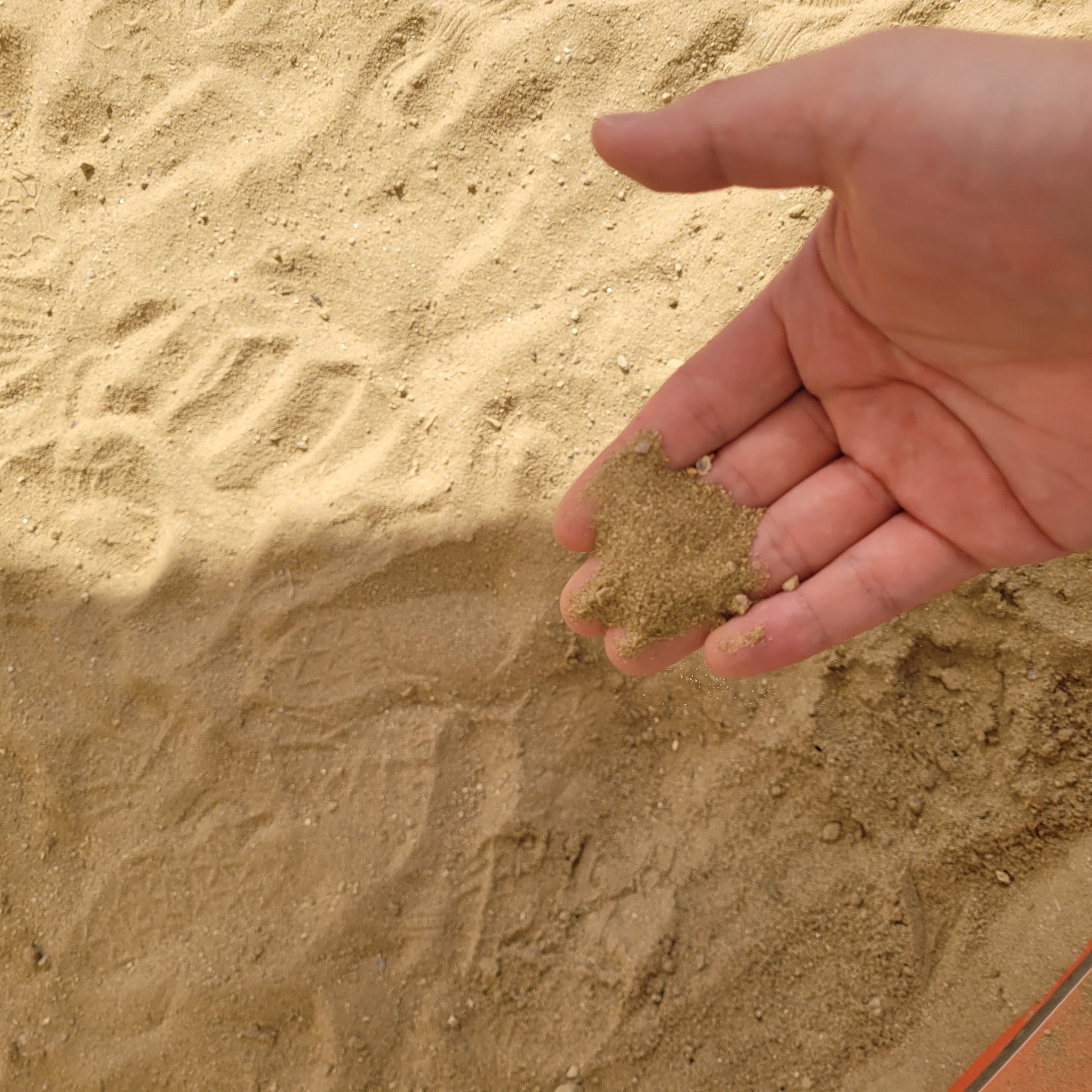
At Maple Leaf Playground, however, a separate area is dedicated entirely to sand play,
making maintenance easier and giving children a safer place to enjoy it.
Watching the many children gathered in the center, happily playing in the sand,
brought back memories of building entire cities of little sand houses.
The Maple Leaf Rest Area’s central location also provides clear views of the play equipment in every direction, so guardians can rest comfortably while their children play.
Playing alongside children, showing them how to use the equipment, and taking photos can be a pleasure,
but keeping up with them in the heat means adults sometimes need a short break.
The rest area thoughtfully meets that need, offering a place to sit in the gentle breeze while keeping an eye on the children.
- Rock Spirit World
Next is Rock Spirit World, featuring several hills reminiscent of Rock Spirits
and a playground favorite: swings.
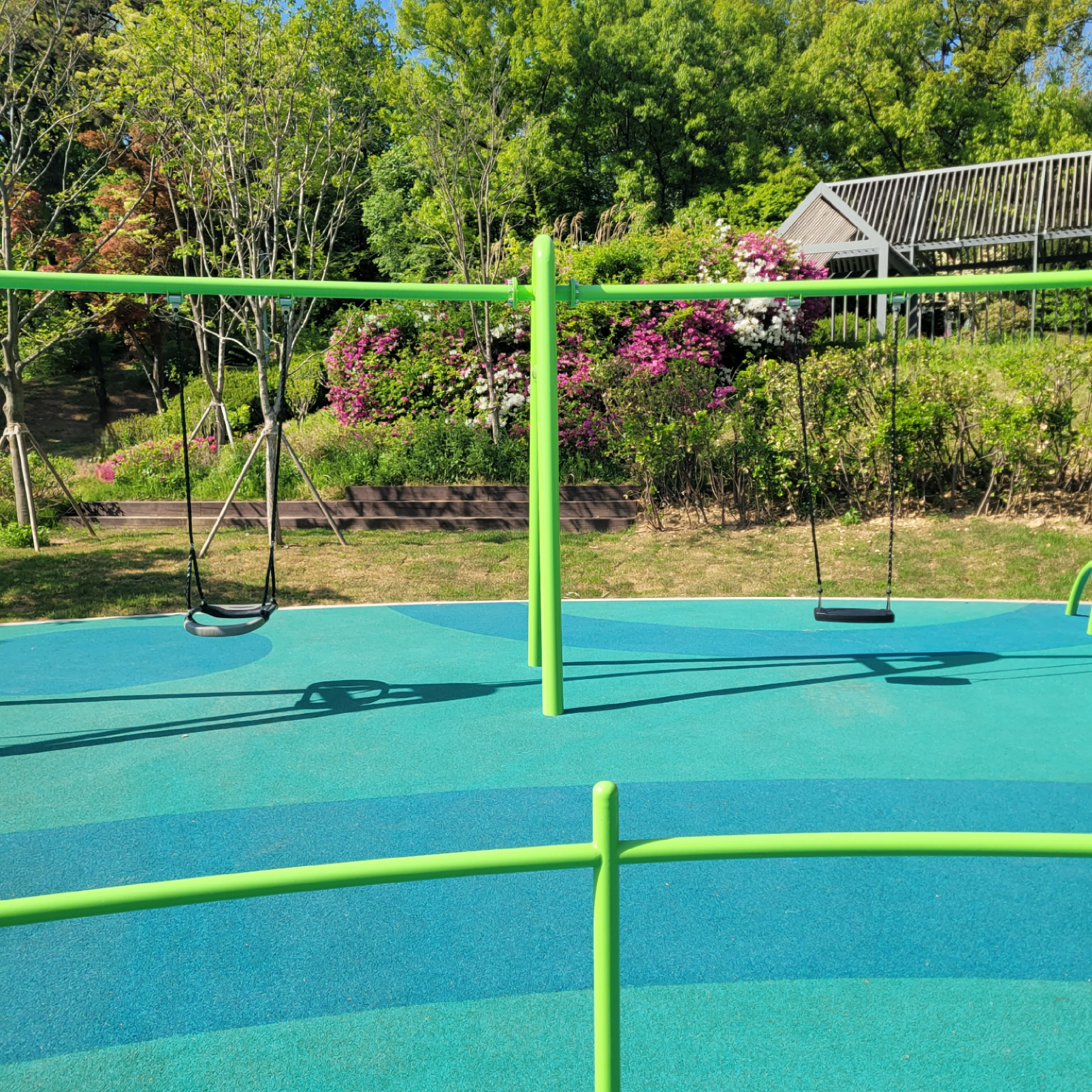
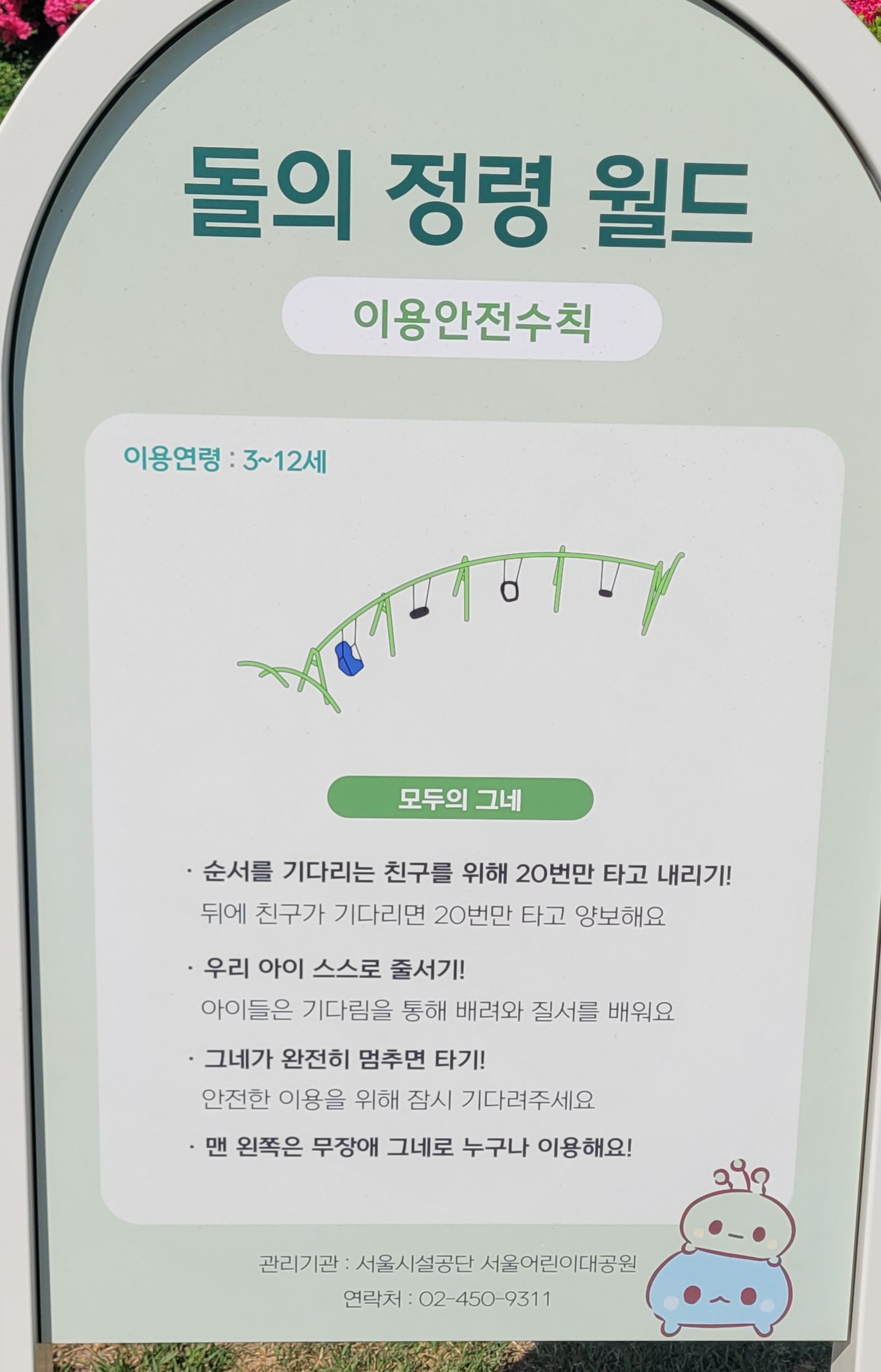
Swings are always popular, so there are 4 in total,
giving children a chance to soar toward the sky and feel the cool breeze.
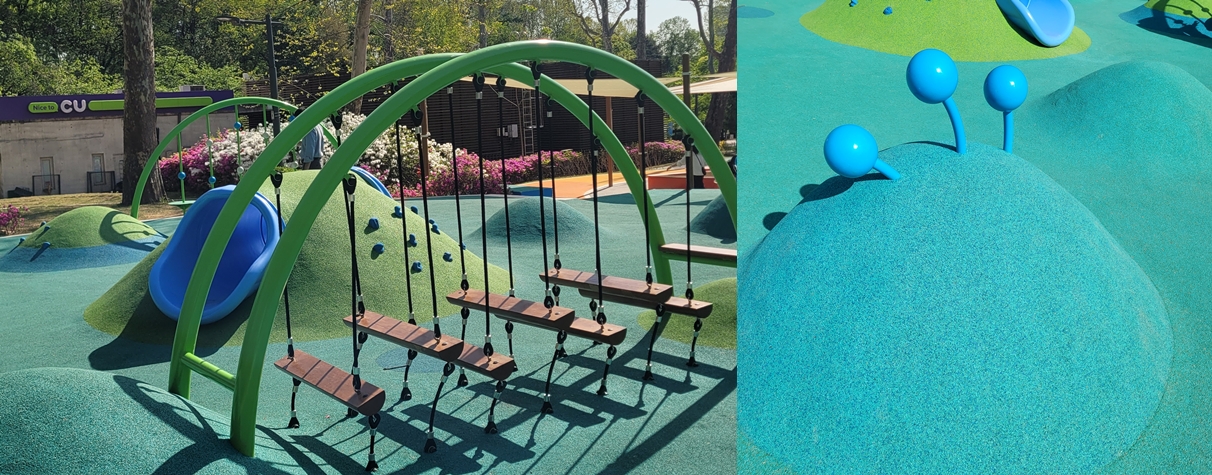
True to the name Rock Spirit World, mounds resembling Rock Spirits are scattered throughout the area,
offering children space to invent their own ways to play.
Even a simple-looking structure can become anything in a child’s imagination.
- Orange Mushroom World
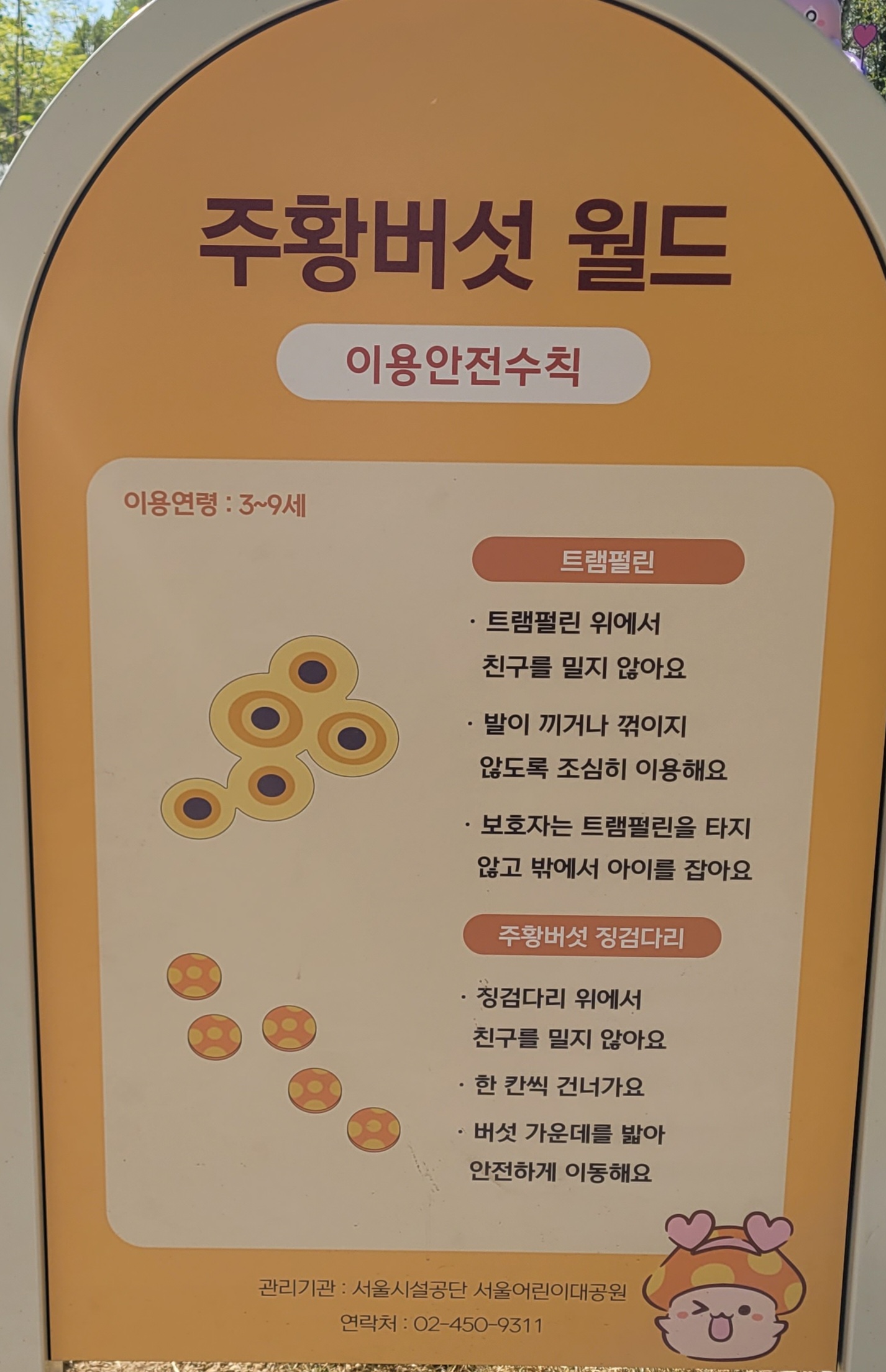
Finally, Orange Mushroom World features stepping stones that let children move from one Orange Mushroom head to the next,
and trampolines where they can become bouncing mushrooms themselves.
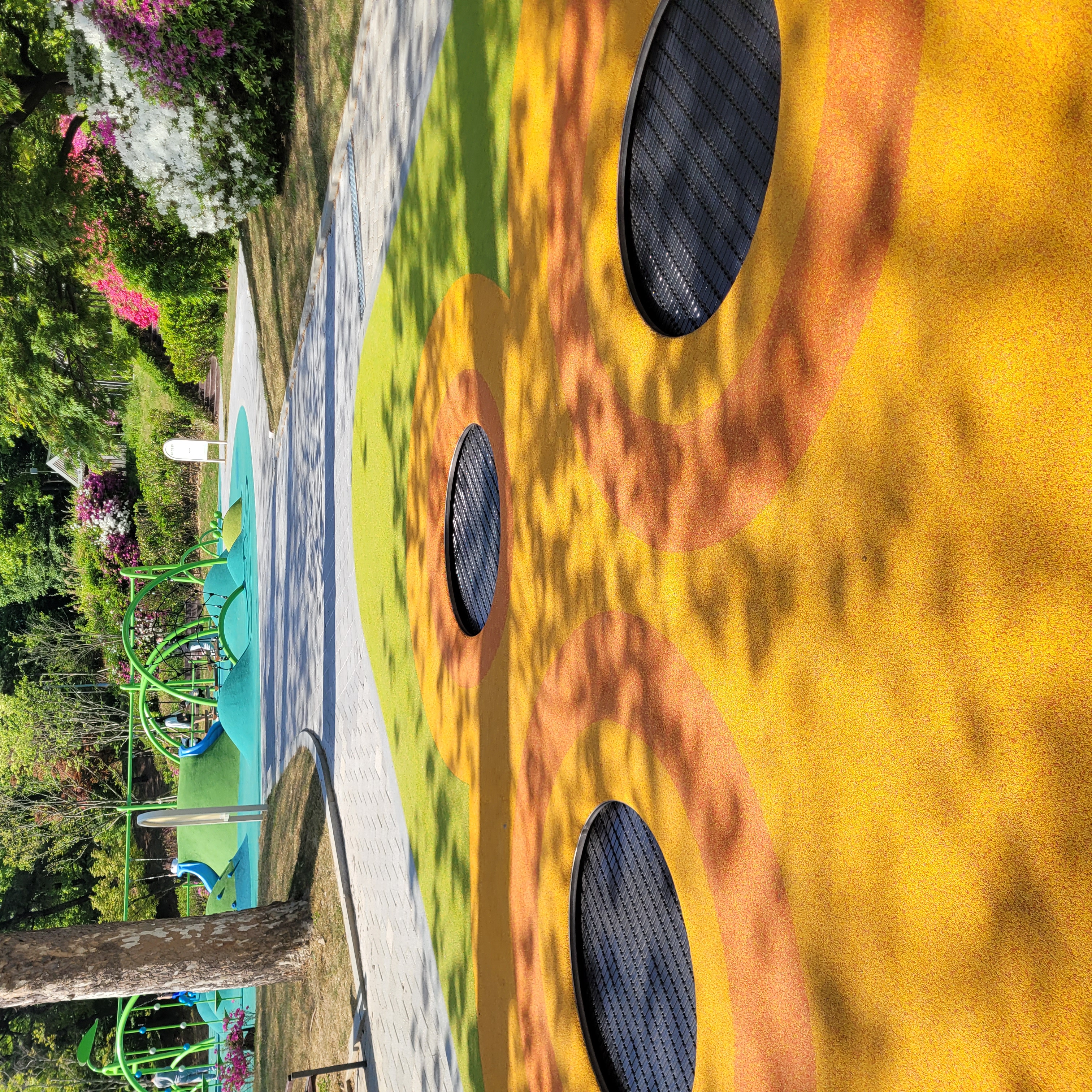
The ground-level trampolines have a wonderfully springy bounce,
and children seem to break into laughter as soon as they start jumping.
The thin, closely woven mesh of older trampolines always seemed a little unsafe to me,
but the trampolines in Orange Mushroom World have a slightly different construction, which I think may lower the risk of getting caught in them.
Still, falls and injuries can happen easily on this kind of equipment, so assistance from a guardian seems necessary.
- Reflections on the Visit
It was immediately clear to me that this playground was designed with both children and guardians in mind.
Children laughed, ran around, and enjoyed the different pieces of equipment,
while adults joined in, helping them take part and have fun.
Even watching from a distance, I found myself sharing in their enjoyment.
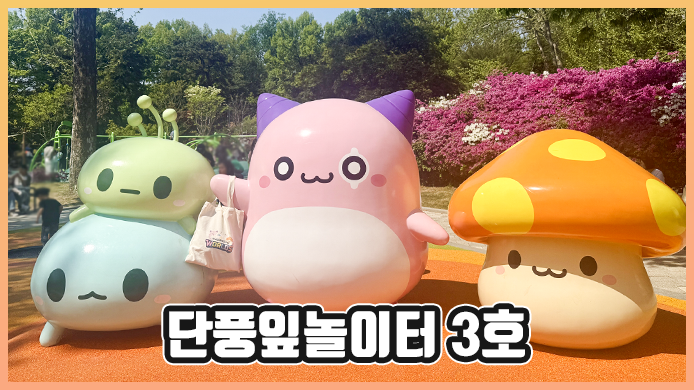
MapleStory’s distinctive features are woven throughout the playground,
and MapleStory’s gentle background music accompanies the visit. Spotting the various elements
normally found only in the game was a small pleasure in itself.
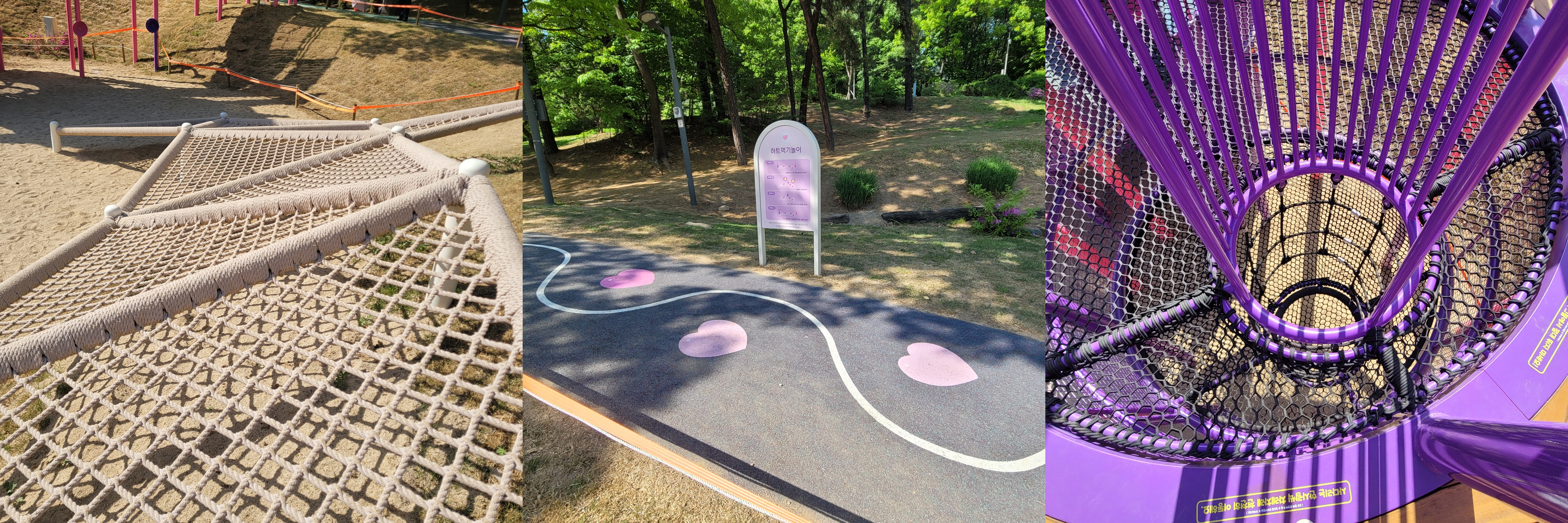
The smaller play spaces are just as engaging as the main equipment,
and I appreciated the care taken to ensure that children could find something enjoyable wherever they went, with room to play freely rather than follow set rules.
With May approaching and a day dedicated to children coming around again,
consider giving children the chance to play freely in all kinds of ways,
while rediscovering your own childhood sense of wonder,
with a visit to Maple Leaf Playground No. 3!